My FAIR Data: A book display on equity, ethics, and the power of information 

Written by Marcela Isuster and Emily Kingsland

What does it mean for data to be fair? 

Inspired by the FAIR principles (Findable, Accessible, Interoperable, and Reusable) this book display reimagines the acronym to ask deeper questions about justice, representation, and responsibility in the digital age. “My FAIR Data” brings together a diverse collection of works that examine how data shapes our lives, our institutions, and our futures. Its works communicate the stories that data tell.  

From the biases embedded in algorithms to the fight for Indigenous data sovereignty, these books explore the social, ethical, and political dimensions of data. They challenge us to consider who is counted, who is left out, and how data can be used to empower or oppress. 

Highlights include: 

Critical viewpoints on artificial intelligence, surveillance, and algorithmic discrimination, such as Big data and democracy, a collection of essays in four parts, which explores the relationship that exists between citizens and data; political advertising; technical issues; and the implications for trust in society.  
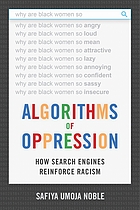
Feminist and queer approaches to data collection and analysis, such as Dr. Safiya Noble’s work Algorithms of oppression: How search engines reinforce racism, which examines how women of colour are negatively biased against in search engine results and algorithms.  

Historical and contemporary insights into data governance, privacy, and stewardship, such as How data happened: A history from the age of reason to the age of algorithms, by Drs. Chris Wiggins and Matthew L. Jones, which delves into the history of data and statistics, from eugenics in Victorian England to facial recognition today.  

Creative storytelling that brings data to life through fiction, memoir, and visual narratives, such as former tech sector startup employee Anna Wiener’s memoir Uncanny valley, which details her time living in San Francisco and her disillusionment with Silicon Valley.  

Indigenous perspectives on research ethics, information governance, and the legacy of colonialism, such as Indigenous statistics: From data deficits to data sovereignty, which brings together research projects from Indigenous Peoples in the United States, Australia, Aotearoa New Zealand, and Canada.   

Whether you’re a data scientist, a student, or simply curious, this display invites you to reflect on the values we embed in our data practices and the kind of future we want to build. 

Come explore “My FAIR Data” and discover how information can be a tool for equity, accountability, and change. 
Pen Names – Redpath Exhibition August 2025

A PSEUDONYM or PEN NAME or NOM DE PLUME is a fictitious name used by an author. 

Why use a pen name?  To preserve anonymity, counter bias, try a new genre, get a fresh start or any other number of reasons! 

All the items in this display are by or about an author who published under a pseudonym. 

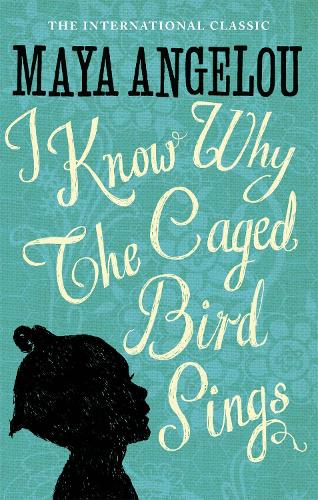
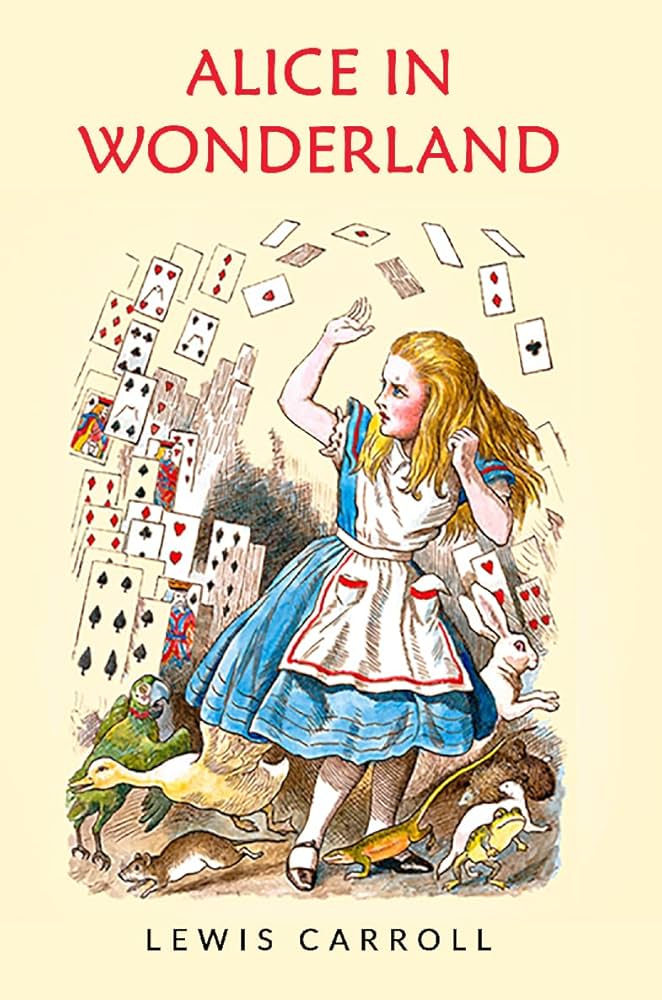
Great works by authors like Lewis Carroll, Maya Angelou, and Voltaire can be found in this display, but their true names have to be sought out. Join us in the hunt to uncover these enigmatic authors by filling out our quiz.

To view an interactive version of this display online, check out our Redpath Book Display page.

The Asianadian, a Publication for the United Minority Communities

The first Asian Canadian magazine, The Asianadian, was published from 1978 to 1985. It was described as a “progressive magazine” that “united Asian Canadian communities, and gave them the opportunity to cultivate a sense of cultural identity and political consciousness”. This historical magazine is a fine example of “Unity in Diversity: The Impact of Asian Communities in Shaping Canadian Identity”, the theme of Asian Heritage Month 2025.

Why The Asianadian?

It’s simply fun to look at this magazine! Pick any issue. Look at it from cover to cover. Leaf through it page by page. Especially if you’re of the digital generation, having little experience with print magazines, you’ll learn about and be fascinated by this vintage form of entertainment.

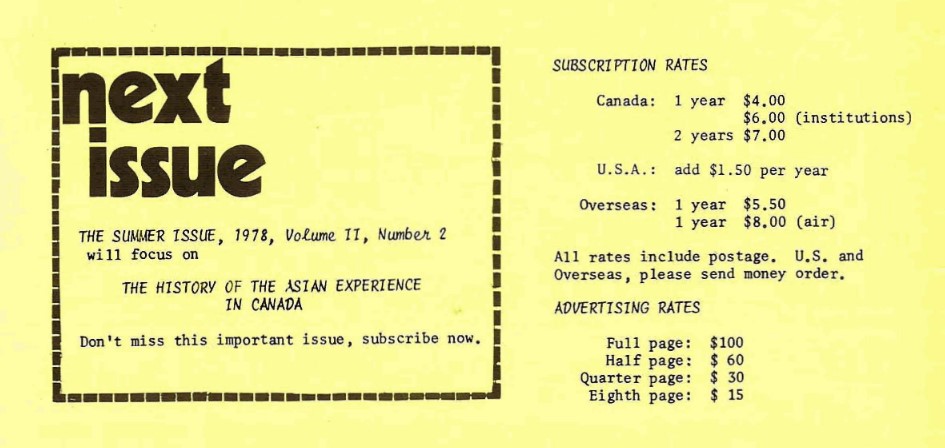
Notice the price on the cover. The first issues cost $1 per issue, $4 per year for individual subscribers, $6 for institutional (library) subscribers! All prices included postage. That’s right, the magazine was physically delivered.

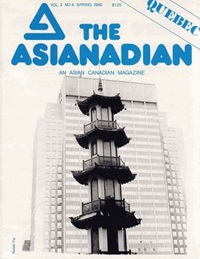
The magazine covered historical, political, cultural and down-to-earth real-life topics that were relevant to to Canadians, not just limited to Asian-Canadians. For an example, browse the Spring 1980 issue on the theme of “Quebec”.

The editorial, written in English and French, discusses the soon-to-be-held Quebec referendum, the French Nationalism that originates from the historical discrimination against French Quebécois as minority in Canada, and the lessons that minorities, including Asianadians and Asiabécois, can learn from French Quebécois.

“…Whatever the outcome of the referendum, the current national consciousness will continue to grow as long as racial inequality perpetuates. French Quebecers have an historical duty to emancipate themselves from the yoke of injustices—just as Asianadians and Asiabécois have an historical duty to fight for equality and dignity.”

« Il adviendra, un jour, que toutes les nations vont, ensemble, s’unir contre les conditions, la haine et le préjugés qui opposèrent leurs ancêtres les uns contre les autres. En attendant ce jour, c’est notre devoir à nous tous de continuer chacun nos luttes nécessaires et complémentaires. »

The Asianadian @ McGill Libraries

All twenty-four issues of The Asianadian are available for download on the publisher’s website. You can also look at print copies of nineteen issues held at Rare Books and Special Collections. (*Our special thanks to Philip Cheong, a native Montréaler and McGill alumnus, whose generous gift enabled the McGill Libraries to purchase these rare items!)