Open Access to Climate Justice

By Kimberly White and Ana Rogers 

Climate change does not affect everyone equally. The term “climate justice” was coined to acknowledge that the effects of climate change “will not be borne equally or fairly, between rich and poor, women and men, and older and younger generations” (UN, 2019). Access to information is a key part of connecting communities across disciplines and understanding the vast and imminent impacts of climate change. Sharing information openly and freely provides an opportunity to address the inequitable impacts of climate change and shape the global response.  

This year’s International Open Access Week (October 24-30, 2022) will focus on Climate Justice to raise awareness around how Open Access can support climate justice. “Open Access” refers to the “free, immediate, online access to the results of scholarly research, and the right to use and re-use those results as you need” (Open Access Week, 2022). 

In conjunction with International Open Access Week, McGill Library has curated a physical and virtual display at the Redpath Complex for the entire month of October, featuring books, films, and music that grapple with the inequities surrounding the climate crisis.  

In the spirit of Open Access, our virtual collection includes only Openly accessible materials and links to books which are held in print and can be accessed onsite by users outside the McGill community. Here are some of the highlights from our collection: 


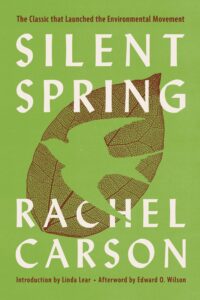
Book cover for Silent Spring by Rachel Carson - The classic that launched the environmental movement. Introduction by Linda Lear, Afterward by Edward O. Wilson. The cover is a soft green with a red veiny leaf. Inside the leaf is the cutout image of a bird in flight. The title and author are overlayed in large white text.

Silent Spring by Rachel Carson

No list of environmental publications would be complete without this groundbreaking 1962 book by Rachel Carson which details the harms caused by pesticide use and the negative impacts on communities exposed to these chemicals. 

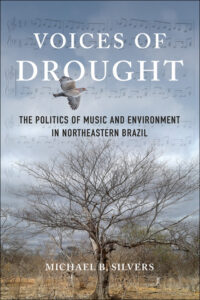
Book cover for Voices of Drought by Michael B. Silvers. The politics of music and environment in Northeastern Brazil. Image includes a bare tree in the foreground and a grey sky with transparent music score in the background.

Voices of Drought by Michael B. Silvers

Voices of Drought takes a unique ethnomusicological approach to Climate Justice by demonstrating how ecological crisis affects musical culture by way of and proportionate to social difference and stratification.

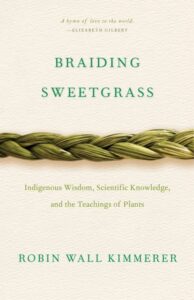
Book cover for Braiding Sweetgrass by Robin Wall Kimmerer. Indigenous Wisdom, Scientific Knowledge, and the Teaching of Plants. "A hymn of love to the world" as quoted by Elizabeth Gilbert. The image is of a single braided grass laying horizontally across the a plain beige background.

Braiding Sweetgrass by Robin Wall Kimmerer

In this book, Indigenous author and botanist Robin Wall Kimmer explores how indigenous wisdom about human interactions with nature, harmonizes with modern scientific knowledge of ecology and sustainable living. 

Cover image for Climate Justice Y'All. The word's and large and sitting on a field of grass with flowers, plants, clouds, etc, emerging from the letters.

Climate Justice Y’All

This ongoing podcast centers on Climate Justice movements in the Southern United States, focusing on Climate Justice leaders and stories from communities in the South where climate change is already having significant impacts. 

Find these and our other selections through the Open Climate Justice Virtual Exhibit or in person in the McLennan Library lobby. 

Digital Scholarship Hub: Workshop Lineup

As with every pre-midterm season at McGill, the campus is buzzing with life! Students are enjoying the last bouts of September sun, lining up for free plants, and queuing at McGill Farmers’ Market.

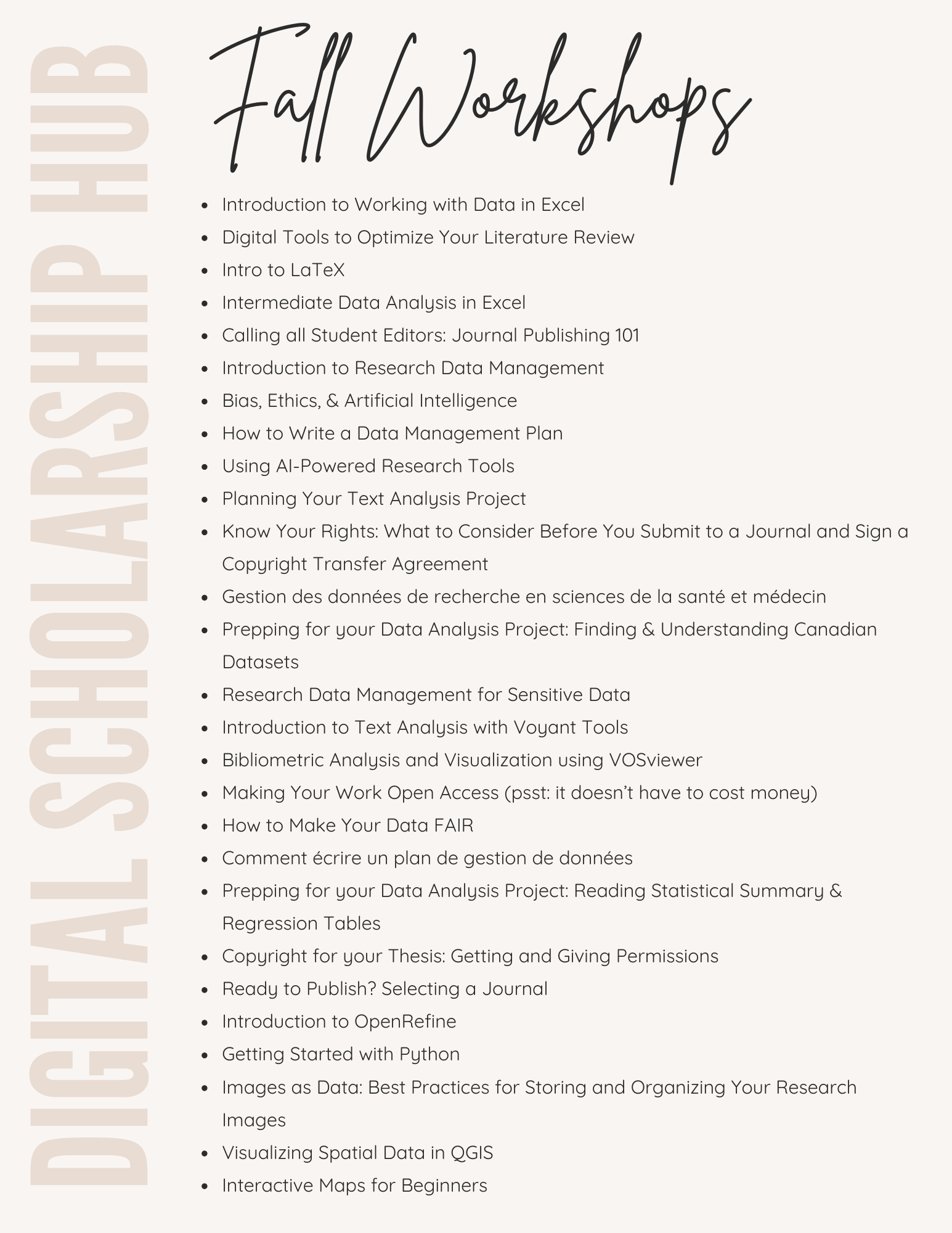
In the midst of all the havoc, McGill Library’s Digital Scholarship Hub (DSH) is back again with its Fall workshop lineup!


We’ve got numerous amazing workshops lined up from September through October. To help you through the rather extensive list, below we highlight some of our personal favourites;

Bias, Ethics, & Artificial Intelligence – September 29, 11am

Are you someone who closely follows the roller coaster ride that is the tech industry? With its continuously growing market and Artificial Intelligence (AI) innovations, it is the point of discussion from every household to every seminar room.

What side of the debate are you on? How ethical do you find the everyday innovations in the industry? Focused on understanding the impact of AI on society as we know it, this workshop aims to dip a toe into these tumultuous waters in order to find ethical solutions to AI development.

Join presenters Amanda Wheatley and Sanday Hervieux as they explore the core issues surrounding AI ethics and how we can overcome these issues to broaden our understanding of technology. 

How to Write a Data Management Plan – October 3, 12pm

This workshop will provide attendees with practical tips and examples on how to write a data management plan for funders, journals, or other oversight organizations. We will demo an online interactive tool, Portage DMP Assistant, which has built-in templates particular to the Canadian research context. Attendees will also have a chance to discuss discipline-specific issues related to planning for the management of data actively during the research process and for long-term archival purposes.

Making Your Work Open Access (psst: it doesn’t have to cost money) – October 25, 12pm

Are you a student-run journal considering the latest trends in scholarly publications? Or perhaps a graduate student looking at the implications of making your thesis public? Well worry no more, you’re not the only one!

This online presentation brings together a group of people looking to make their work open to access. While the discussion will be focused on the role of grant-holders and the support they can find on-campus for making their work open access, the presentation is open to everyone!

Ready to Publish? Selecting a Journal – November 3, 12pm

Finished your research and looking to publish? This 45-minute workshop will outline how to locate and assess relevant journals in your discipline. This workshop will also discuss the basics of the peer review process, journal selection considerations, and frequently asked questions about publishing. This workshop will serve as an introduction to the topic for new researchers and those just starting to publish.

At the end of this workshop participants will be able to:

  • Describe tools and strategies to identify appropriate journals in their discipline
  • Describe the peer review process
  • Describe main considerations when choosing a journal

Also, stay tuned for our Workshop Spotlights over the next few weeks!

Check out DSH’s calendar for their upcoming workshops and office hours schedule. And for further queries, email us at hssl.library@mcgill.ca.

ALA Banned Books Week: September 18-24

Anyone who follows the news (and how can you avoid it these days?) knows that the movement to ban books is growing. September 18 – 24 is the 40th annual Banned Books Week. According to the American Library Association’s (ALA) website, Banned Books Week “celebrates the freedom to read and spotlights current and historical attempts to censor books in libraries and schools.” The theme for Banned Books Week 2022 is “Books Unite Us. Censorship Divides Us.” By bringing attention to book challenges happening across the United States, Banned Books Week highlights the harms of censorship.

The ALA’s Top 10 Most Challenged Books of 2021 (available at McGill)

Book challenges occur for numerous reasons but frequent complaints are that a book is sexually explicit, contains offensive language, or is inappropriate for its intended age group. One of the most targeted books of 2021 was Maia Kobabe’s graphic memoir about sexual identity, “Gender Queer.” Most of the recent book challenges target YA books with LGBTQ+ characters, according to the ALA. In their statement on the widespread efforts to censor books in U.S. schools and libraries, they write:

In recent months, a few organizations have advanced the proposition that the voices of the marginalized have no place on library shelves. To this end they have launched campaigns demanding the censorship of books and resources that mirror the lives of those who are gay, queer, or transgender, or that tell the stories of persons who are Black, Indigenous or persons of color. Falsely claiming that these works are subversive, immoral, or worse, these groups induce elected and non-elected officials to abandon constitutional principles, ignore the rule of law, and disregard individual rights to promote government censorship of library collections. Some of these groups even resort to intimidation and threats to achieve their ends, targeting the safety and livelihoods of library workers, educators, and board members who have dedicated themselves to public service, to informing our communities, and educating our youth. 

ALA strongly condemns these acts of censorship and intimidation.

“ALA Statement on Book Censorship”, American Library Association, November 29, 2021.

Historically, many books now considered classics were challenged, including school curriculum mainstays such as The Great Gatsby, The Catcher in the Rye, To Kill a Mockingbird and Of Mice and Men. Book bans may seem like a uniquely American problem, but they happen in Canada too. Here is a list compiled by the CBC of 12 Canadian books that have been challenged, and where to find them at McGill. This is why Canadian libraries have their own version of Banned Books Week, the Freedom to Read Week in February.