Gardening: The Perfect Pastime?!

The birds are chirping, the flowers are blooming, and the sun has unleashed my inner gardener. Hosted by Dana Ingalls, a Liaison librarian at MacDonald Campus, the Introduction to Gardening Workshop on April 1st 2021 was a great session to encourage the McGill Community to nurture their green thumb. 

With another 8 pm curfew in place, our life in Montreal seems to have slowed down again. However, this provides a great opportunity to cultivate our own little gardens using tools and many resources which are easily accessible! The Macdonald Campus Seed Library Guide on the McGill Library web site is such a great place to look – it contains lots of information on how to obtain the seeds needed, as well as all the necessary next steps to be successful! The workshop really emphasized that no matter the size of your living space, there is always a way to start a garden.

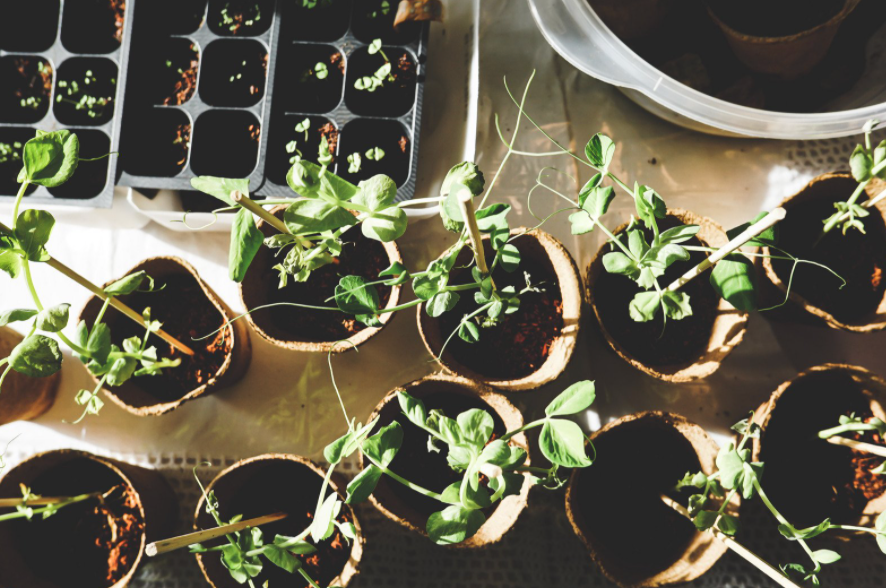
If you have a small indoor space you can start a garden by planting herbs (basil, parsley, cilantro, chives, mint…), hot peppers, cherry tomatoes, green onions, lettuce, microgreens, carrots, radishes, etc. Get some old containers, poke some holes in them, and get growing! Seed starting is very important for a healthy plant. Make sure you have a warm room, fertilizers, LOTS of light (artificial growing light bulbs are great) and seed starting soil mix (or you can sift any soil to make sure there are no rocks/chips which would prevent the seedlings from growing). April is a great time to start some veggie seeds inside, like tomatoes. 

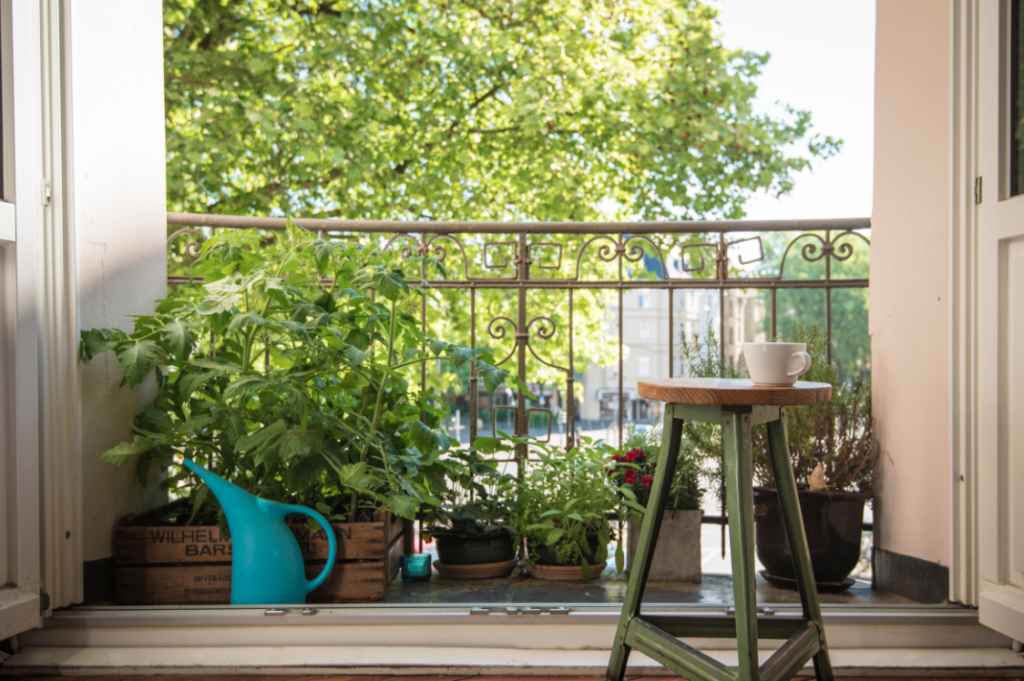
If you have a patio or small outdoor space, you can use containers and set them where available. Any size is good, depending on what you’re growing and what you have. You can even use reusable tote bags if you make sure to create drainage holes if there aren’t any. Most vegetables and herbs can be grown in containers, even the big ones like corn or giant pumpkins. To maximize space, trellises are great for climbing vegetables (cucumbers, zucchini, peas, etc.)

If you have a larger yard, you can either grow directly in the ground, or build raised beds.  However, be diligent because the soil in many parts of the Montréal area is stony, and clay is common, so garden plots must be well-tilled, cleared of stones, and fertilized! 

Dana’s workshop was great as it covered many topics: common pests and how to deter them, starting points for beginners, an introduction to companion planting (a great way to utilize space and the nutrients in the soil), and how to save your seeds for next season. As someone who has been intimidated by gardening for a long time, and struggles to keep a cactus alive, this workshop really made me realize, it’s just about starting strong and then committing to your little plant babies!

If you’re interested in watching the workshop recording you can click here. if you have any gardening related-questions, you can contact Dana by emailing her at dana.ingalls@mcgill.ca

Happy Planting! 

Redpath Book Display: Welcome to the Digital World!

The Humanities and Social Sciences Library presents our next book display: Welcome to the Digital World, where all the same wonders and struggles of life outside of the internet manifest in new – and sometimes not-so-new-  ways online. Through this display we aim to show the many aspects of digital spaces and what it means to be a digital citizen. 

With a discussion as big as the virtual world, the topics are nearly endless. In order to better understand different aspects of digital citizenship, we have curated different sections of interest, including:

Digital Citizenship- These books take you on a deeper dive into what online citizenship means in the context of communities, relationships, and society.

Social Media – How do we express ourselves online and how does this digital space shape our identities? Take a closer look at vibrant online communities and individuals.

Online Psychology – The online world has an unquestionable unique effect on our emotions and psyche. This section looks at the ways being online helps and harms your mental health, and how to prioritize self-care in the real and virtual world. 

Work and Online – Now with work, school, and extracurriculars online due to the COVID-19 pandemic, how do we maintain motivation and continue to grow?  Take a look at this section for books on how to improve your work/life balance at home. 

Empathy – How does gaming, virtual reality (VR) and more, affect our ability to relate to one another? Can VR be a tool for actually stepping into someone else’s shoes? 

Love – Currently, 20% of Canadian committed relationships began online. This new medium of contact has profoundly changed the way people connect romantically.  How has our approach to dating changed, if at all, within the last few decades of apps, websites and services that match you up?

In addition to books, the display includes suggested videos, documentaries, games, and more to explore this topic of digital citizenship. Happy browsing!

If you have any questions, feel free to email hssl.library@mcgill.ca. 

Where are all the Women in Wikipedia?

Wikipedia logo assembled piece by piece created by Giulia Forsythe.
Wikipedia. Created by giulia.forsythe

How many times did you consult Wikipedia in the last month, week or even today? Once, twice maybe more? Perhaps you saw that Japanese tennis star Naomi Osaka recently won the 2021 Australian Open, googled her and stumbled across her Wikipedia page only to realize that hours later you were stuck in a Wiki rabbit hole learning about the “first widespread animation device that created a fluent illusion of motion”, the phenakistiscope. For whatever the reason, the English Wikipedia, and its over 6 million articles, is a gold mine of information, but not for all topics.  

The Gender Gap

There is a severe Gender Bias in Wikipedia, which manifests itself in multiple forms: most contributors are men, most biographies are about men, concepts that are of interest to women have less coverage, and articles written by women or about women are consistently questioned over those articles written by men or about men. Wikipedia has a Gender Bias toward Women. Despite these gaps, however, there are numerous projects that are working to help address them and offer more diverse coverage of subjects on and about Women.  

Female symbol. Created by Gustavb

Women in Red WikiProject 

The WikiProject, Women in Red, seeks to increase the number of biographies on Women in Wikipedia by transforming red links (links without a Wikipedia article) into blue links (links with a Wikipedia article.). Additionally, Women in Red seeks to increase the visibility of Women by adding Creative Commons licenses photographs to Wikimedia Commons that can then be used in Wikipedia articles or outside of the Wikimedia projects.  

Women WikiProject 

The Women WikiProject group’s goal is to improve Wikipedia’s coverage of subjects pertaining to women and invites contributions from people of all gender identities, sexual orientations, geographic locations and backgrounds to participate.  

Art+Feminism 

Art+Feminism is an international community that “strives to close the information gap about gender, feminism, and the arts on the internet.” The community is responsible for many edit-a-thons focused on closing these gaps in Wikipedia.    

Les Sans PagEs 

Et en français there is the Les sans PagEs group, that is dedicated to turning red (dead) links into blue (functional) links in pages about women, feminism, and other underrepresented subjects . The Les sans PagEs group intersects with the Women in Red WikiProject and the Art+Feminism group by expanding the work on the Francophone Wikipedia.  

How you can contribute! 

Contributing to Wikipedia is open to all! You do not have to be anybody special to correct, change or create entries in Wikipedia.  There are many ways to contribute: 

  1. Adding references (citations) to existing Wikipedia articles 
  1. Correcting punctuation in existing Wikipedia articles 
  1. Expanding and adding content (sections, paragraphs, etc.) to existing Wikipedia articles 
  1. Translating existing Wikipedia articles into other languages 
  1. Illustrating Wikipedia articles with Creative Commons licensed images 
  1. Creating a new Wikipedia article from the scratch 

Interested in learning how to contribute? Join me for an introductory workshop on contributing to Wikipedia on Tuesday 9 March 2021 from 12:00 to 13:00Registration required. The workshop will be given via the Zoom platform and will focus on contributing to the English-language Wikipedia. 

Can’t make it to the workshop? Wikipedia has numerous resources that can help you self-teach on how to contribute.  

For more information contact hssl.library@mcgill.ca.