Open access textbooks downloadable for free – bookboon.com

If you would like a quality and free e-book on a topic of your studies, bookboon.com might be a place to go. It provides more than 800 free textbooks in PDF format for everyone to download, even without registration. Topics cover from economics, statistics, IT, engineering, to natural science. Don’t think free things are always in poor quality. Actually, most titles on bookboon.com were written by authoritative authors in the field. Find a book that you are interested in at bookboon.com.

Gault Nature Reserve

This is a great time of year to get outdoors in a big scarf and take a walk, listening to the crunching of the leaves under your feet. You don’t have to venture too far outside Montreal to get a nature fix and find some nice hiking trails. Close by, in Mont Saint-Hilaire, you’ll find the Gault Nature Reserve, a private Reserve affiliated with the Faculty of Science of McGill University. From their website:

Gault Nature Reserve of McGill University is a private Reserve which protects 1000 hectares of natural primeval forests of the St. Lawrence Valley. Situated at Mont-Saint-Hilaire approximately 40 km from Montreal, this panoramic natural landscape is ideal for discovering nature, teaching and university research. The public sector with 25 km of trail network is open 365 days per year for visitors’ enjoyment.

Affiliated with the Faculty of Science of McGill University, the Gault team offers support to research and teaching of natural sciences while providing a wide range of services to the university community and the general public.

Image from www.mcgill.ca/gault

Science & technology research in Canada

The Council of Canadian Academies recently released a report entitled, The State of Science and Technology in Canada, 2012.  It reveals the 6 research fields in which Canada is among the best.  These are:

  • Clinical Medicine
  • Historical Studies
  • Information and Communication Technologies
  • Physics and Astronomy
  • Psychology and Cognitive Sciences
  • Visual and Performing Arts

For more information, read the report or watch the video below:

Women in Science, Engineering and Medicine Symposium at McGill on Friday and Saturday

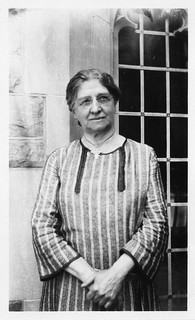
Carrie Derick, Canada's first female full professor

Carrie Derick, Canada’s first female full professor

If you’re coming to McGill for Homecoming next weekend, you might want to check out the Women in Science, Engineering and Medicine Symposium (WISEMS) 2012, on Friday, October 12 and Saturday, October 13 in the Redpath Museum Auditorium.

“As part of McGill Homecoming 2012, this first Women in Science, Engineering and Medicine Symposium (WISEMS) marks the centenary of the university’s first geneticist, Carrie Derick, being appointed as Canada’s first female professor.”

Have a look at the full schedule for this free symposium, which will look at the history, current status and future of women in STM fields.

Previously: We’ve come a long way baby, right?

Image: by Smithsonian Institution (from flickr Commons)

No plans for the long weekend? Why not catch some zzz’s?

This is one of my favourite TED Talks from Arianna Huffington: How to succeed? Get more sleep. It was recorded live at TEDWomen in December, 2010. She knows something about the value of sleep, having fainted from exhaustion and broken her cheekbone on her desk. If you feel exhaustion creeping up, this short pep talk may be just the thing.

Schulich Library will be closed this Thanksgiving Monday so I plan on taking her advice and getting the most out of the long weekend with a few good sleeps.

Sweet dreams!

Now in the realm of the possible: the 10-dollar robot

Wired.com has a story about the winners of the AFRON “10 Dollar Robot” Design Challenge, run by the African Robotics Network (AFRON). The object of the contest was to see what sorts of design ideas would arise, in the hope of creating really affordable robots for educational use in Africa (and elsewhere), similar to what Raspberry Pi aims to do for computing.

“The contest had a few simple restrictions, including the loose $10 target; entrants from around the world had to build a prototype, offer instructions on a website, and make the whole plan open-source, software included. The winners were little, an inch or two in size and up, never more than a foot long. They were sourced from cardboard, old cell phones, and circuit boards. They performed simple tasks: navigating, following lines, even communicating with each other.”

Kilobot from Harvard University, introduced in the video below, was the winner in the Traditional (Roaming) Category.

[Video link]

These $10 Robots Will Change Robotics Education

2012 McGill University Faculty of Science Undergraduate Research Conference

This event will take place on Thursday, Oct. 4, in the lobby of the Arts Building. It is a great opportunity for everyone to see the outstanding research work done by some of the Science undergraduate students and get inspired by the creative ideas behind each poster. Viewing of student posters starts at 10 am. Please arrive before 4 pm for the prize ceremony and a keynote address by NSERC President Dr. Suzanne Fortier. Please click here to learn more about this event and its schedule. You may also read this article published in McGill Reporter for further information.

Dissolvable electronics and medicine

The paper, “A Physically Transient Form of Silicon Electronics,” which was published in last week’s issue of Science generated a lot of coverage in the news media.  It reports on silicon-based materials that dissolve after a period of time and their potential future application for implantable medical devices.

For more information, read the article or listen to the Science podcast.

Image from Microsoft Office Clipart

Stay Alert

Are you looking for a way to stay on top of new research in your field or on a particular topic? Consider setting up an email alert in one or more research databases that you search regularly. Email alerts are messages sent after every weekly database update that contain any new records matching a saved query. To create alerts, most databases require that you register or set up a personal account. Registration in research databases is free and it’s a good idea to set up an account anyway, as you may want to take advantage of other features available to you when you are signed in.

It’s as simple as signing in, plugging in your search and then on the results page, clicking on “Create Alert” (or some variation on that, depending on the database). You will now receive an email each time new content matching your search is added to the database. Compendex, the premier research database for engineers, has a “Create Alert” option and this is what the button looks like:

Once you click on it, the alert is created, and if you want to remove it, you click on “Remove Alert”. If you need help, click on the “help” button at the top of the page (most, if not all, databases have a help button). These help pages are very well organized and within the table of contents, look for the topic about creating and working with email alerts.


3D printers for the masses

The latest Wired magazine arrived at my door today and on the cover: a MakerBot three-dimensional printer, slated to change the world. There are actually two new machines available for under three thousand dollars that can create objects in bioplastic from CAD files. A 3D printer in 4-6 weeks? Crazy, right?

The Wired article brought to mind Cory Doctorow’s story, Printcrime, originally published in 2006 in Nature. It is a short story and a good one so I won’t give away the ending here but it is about a man who goes to prison for building and operating a 3D printer.

I admit that I have been day dreaming about 3D printers ever since I noticed that there is the possibility of a live demonstration on October 20 at the Access 2012 library technology conference, from folks at Dalhousie Libraries. I’ll be there with camera in hand and I’ll check back in with you afterwards!

Image from Makerbot Industries