Now in the realm of the possible: the 10-dollar robot

Wired.com has a story about the winners of the AFRON “10 Dollar Robot” Design Challenge, run by the African Robotics Network (AFRON). The object of the contest was to see what sorts of design ideas would arise, in the hope of creating really affordable robots for educational use in Africa (and elsewhere), similar to what Raspberry Pi aims to do for computing.

“The contest had a few simple restrictions, including the loose $10 target; entrants from around the world had to build a prototype, offer instructions on a website, and make the whole plan open-source, software included. The winners were little, an inch or two in size and up, never more than a foot long. They were sourced from cardboard, old cell phones, and circuit boards. They performed simple tasks: navigating, following lines, even communicating with each other.”

Kilobot from Harvard University, introduced in the video below, was the winner in the Traditional (Roaming) Category.


[Video link]

These $10 Robots Will Change Robotics Education

2012 McGill University Faculty of Science Undergraduate Research Conference

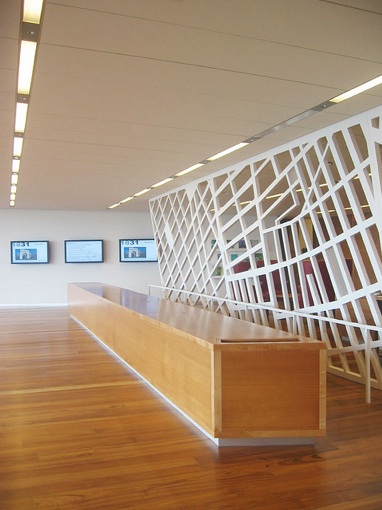
This event will take place on Thursday, Oct. 4, in the lobby of the Arts Building. It is a great opportunity for everyone to see the outstanding research work done by some of the Science undergraduate students and get inspired by the creative ideas behind each poster. Viewing of student posters starts at 10 am. Please arrive before 4 pm for the prize ceremony and a keynote address by NSERC President Dr. Suzanne Fortier. Please click here to learn more about this event and its schedule. You may also read this article published in McGill Reporter for further information.

Dissolvable electronics and medicine

The paper, “A Physically Transient Form of Silicon Electronics,” which was published in last week’s issue of Science generated a lot of coverage in the news media.  It reports on silicon-based materials that dissolve after a period of time and their potential future application for implantable medical devices.

For more information, read the article or listen to the Science podcast.

Image from Microsoft Office Clipart

Stay Alert

Are you looking for a way to stay on top of new research in your field or on a particular topic? Consider setting up an email alert in one or more research databases that you search regularly. Email alerts are messages sent after every weekly database update that contain any new records matching a saved query. To create alerts, most databases require that you register or set up a personal account. Registration in research databases is free and it’s a good idea to set up an account anyway, as you may want to take advantage of other features available to you when you are signed in.

It’s as simple as signing in, plugging in your search and then on the results page, clicking on “Create Alert” (or some variation on that, depending on the database). You will now receive an email each time new content matching your search is added to the database. Compendex, the premier research database for engineers, has a “Create Alert” option and this is what the button looks like:

Once you click on it, the alert is created, and if you want to remove it, you click on “Remove Alert”. If you need help, click on the “help” button at the top of the page (most, if not all, databases have a help button). These help pages are very well organized and within the table of contents, look for the topic about creating and working with email alerts.

3D printers for the masses

The latest Wired magazine arrived at my door today and on the cover: a MakerBot three-dimensional printer, slated to change the world. There are actually two new machines available for under three thousand dollars that can create objects in bioplastic from CAD files. A 3D printer in 4-6 weeks? Crazy, right?

The Wired article brought to mind Cory Doctorow’s story, Printcrime, originally published in 2006 in Nature. It is a short story and a good one so I won’t give away the ending here but it is about a man who goes to prison for building and operating a 3D printer.

I admit that I have been day dreaming about 3D printers ever since I noticed that there is the possibility of a live demonstration on October 20 at the Access 2012 library technology conference, from folks at Dalhousie Libraries. I’ll be there with camera in hand and I’ll check back in with you afterwards!

Image from Makerbot Industries

Our principal joins the New York Academy of Sciences

“Prof. Heather Munroe-Blum, Principal and Vice-Chancellor of McGill University, has been named to the prestigious President’s Council of the New York Academy of Sciences (NYAS). She will join 27 Nobel laureates and other prominent leaders of academia and industry from around the world on this advisory board. The mission of the Academy is to promote the resolution of society’s global challenges through science-based solutions, to support scientific literacy and to advance scientific research and knowledge.”

For more information, see McGill Principal appointed to NYAS President’s Council

Image by Associated Fabrication

So that’s how a Space Shuttle gets around on Earth!

Space Shuttle Endeavour on top of NASA's Shuttle Carrier Aircraft above California

Endeavour on its tour of California

I really liked these photos at Wired and these photos from NASA of the retirement journey of Space Shuttle Endeavour to California last week. Endeavour was the fifth Space Shuttle commissioned and had its first flight to space over 20 years ago on May 7, 1992.  In my mind’s eye, the Space Shuttles would have eclipsed a Boeing 747 in size, but apparently not so!

From NASA’s Space Shuttle mission news: “Endeavour was NASA’s fifth and final space shuttle to be built. Construction began on Sept. 28, 1987 and it rolled out of the assembly plant in Palmdale, Calif. in April 1991. It was named after a ship chartered to traverse the South Pacific in 1768 and captained by 18th century explorer James Cook. Endeavour flew 25 times, traveling more than 122,000 miles and accumulating 299 days in space. Like shuttles Discovery, Enterprise and Atlantis, Endeavour is embarking on its next mission – to inspire the next generation of explorers and engineers at the California Science Center.”

If you’re looking for info, articles or books about space flight, Schulich Library has a subject guide devoted to Aerospace Engineering. There you can find recommended databases, materials for finding background information and links to other relevant sites.

Image: NASA / Jim Ross

Writing in the Sciences

Writing is not only a duty for the students in humanities and social science majors, students in sciences at different levels all face the challenge of good writing. As a librarian in a science and engineering library, I often receive questions on this matter. A hands-on course with quality examples and practice may address this need.

Starting tomorrow, Sep 24th 2012, Kristin Sainani, a professor at Stanford University and also a health and science writer, will offer an online open access course on Coursera, Writing in the Sciences.  As the introduction says, “this is a hands-on course that focuses on examples and practice. In the first four weeks, we will review principles of effective writing, examples of good and bad writing, and tips for making the writing process easier. In the second four weeks, we will examine issues specific to scientific writing.”  Read more at Writing in the Sciences.


Do it yourself science videos

If you are thinking of dabbling in videography, here is some advice on making science videos from MinutePhysics creator, Henry Reich, in Waterloo, Canada.

MinutePhysics celebrated it’s first birthday this year and is now up to 67 educational and entertaining videos, 35,011,571 views and 487,686 subscribers. Learn about the Higgs boson (parts I, II, and III), for example, or why there is no pink light.

Oh, and be sure to watch the Rolling in the Higgs video from McGill graduate student, Tim Blais, for an extra boost of inspiration.

Happy DIY!

Food for thought

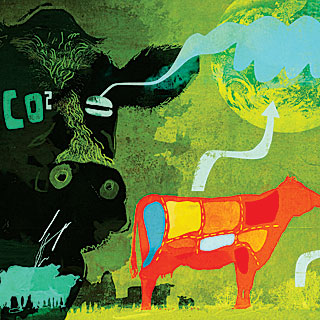
I love hamburgers. What’s not to love? I’m not really a gourmet burger type of girl (brie cheese and pear chutney – no thanks) or a McDonald’s junkie (I have been known to rhapsodize once in a while though, about the perfection of the McDonald’s cheeseburger). My poison is the simple diner burger, dressed with lettuce, cheese, tomato and pickle. The key to my enjoyment of these tasty delights is that I enjoy them in moderation. I’m certainly not the poster girl for moderation but I do have a basic understanding of over-consumption and the toll this can take on the body and the earth. I learned a lot about this cause and effect from The hidden costs of hamburgers, a short animated video produced by The Center for Investigative Reporting. You may have heard it all before, but the animation and the script are really well done, and at the very least, it’s a basic review of the environmental impact of beef production on an unsustainable scale.

Image by Andy Potts for Scientific American