Webometrics

There is no shortage of university rankings to be found on the Internet but I’d be hard pressed to find one as inclusive as the Webometrics Ranking, or as dedicated to self-improvement. The ranking, produced by Cybermetrics Lab (a research group of the Spanish National Research Council), covers more than 20 000 universities worldwide. They designed indicators of impact (links in to the university domain from third parties), presence (university pages found in Google), openness (files found in Google Scholar, including PDFs and other files from a university’s repository), and excellence (highly cited papers in scientific fields). It is quite an interesting methodology.

The raising of our roof

Look up to your right when you enter the Frank Dawson Adams Building from the campus side (or from the Roddick Gates side).  There’s a shiny new cupola that was placed on the roof of the Macdonald Stewart Library Building this week.  Read more about the raising of our roof, and see a brief video of the installation, in the McGill Reporter.

DOAJ – Directory of Open Access Journals

doajYou probably have heard of the open access movement or open access journals. Do you know of a source that exclusively lists open access scholarly journals? The Directory of Open Access Journals (DOAJ) is such a list, where you could search for peer-reviewed journal articles and browse them by subject. For example, Geography has 123 journal titles right now. Since this source is freely available, it may become one of your essential sources for academic content once you graduate.

Dutch National Library makes progress with copyrighted material

Copyright has been an issue which sustains authors’ ability to produce, on the one hand, and, on the other hand, limits readers’ use to a certain extent. As guardians of copyrighted material, libraries make every effort to help maximize the use of its materials.

The Dutch National Library recently took this a step further by digitizing its copyrighted material and giving full access to the public. Instead of resolving the copyright issue with authors one by one, it took an “opt-out model” and asked copyright owners to contact the library if they didn’t agree to making their material available online.

Read more at Dutch National Library gives full access to in copyright material.

What is “peer review”?

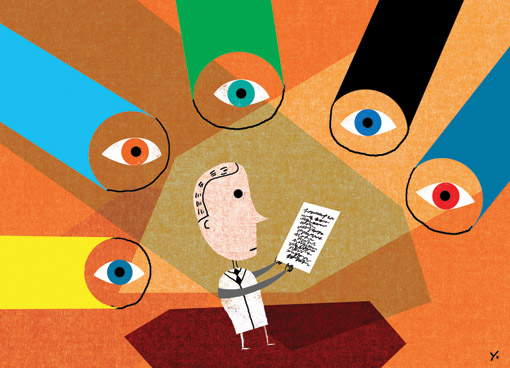
peer_reviewWe write a lot on this blog about finding, reading, and evaluating research articles and this post is about understanding the meaning of “peer review” in the context of scholarly publishing.

When we teach students about research methods during orientation, in their classrooms, and during one-on-one consultations, we always introduce the concept of scholarly vs. popular literature. That is, the difference between articles written by and for other researchers, and articles written by journalists and other types of authors for the general public (magazine and newspaper articles for example).

Most scholarly articles have gone through a peer review process, where one or more experts have evaluated the study and given it a stamp of approval. It is now ready for publication and use by other researchers to build upon the ideas in the study. This is just meant as a very lean preamble to a more in-depth article about peer review on the website boing boing. This easy to understand article is part of Meet Science, a series intended to “provid[e] quick run-downs of oft-referenced concepts, controversies, and tools that aren’t always well-explained by the media.” The article is succinct and attempts to answer some pertinent questions about the peer review process. I hope you find it helpful.

Image from www.pioneersread.wordpress.com

Can serious research be funny?

While readimascotng the newspaper, I came across a reference to the Ig Noble Prizes, which celebrates research that makes people laugh and then think.  The organization, Improbable Research, also publishes a bi-monthly magazine called, Annals of Improbable Research.  Check it out to laugh and for thought-provoking studies.

Image of “The Stinker,” the official mascot of the Ig Noble Prizes, from www.improbable.com/ig/

Ten tips for a GIS job interview

interviewApril is a busy month when you are wrapping up your studies and planning your summer activities. For those of you who are preparing for a job interview in the GIS field, I would like to share the following tips from GIS Lounge.

  1. Volunteer
  2. Create a portfolio
  3. Research the GIS job you are interviewing for
  4. Don’t rush to answer
  5. Project the right body language
  6. Make sure to highlight your experiences
  7. Demonstrate your ability to work collaboratively
  8. Be positive
  9. Show an interest in your prospective place of employment
  10. Show your passion

For details of these tips, please read here.

Image credits to Microsoft Images.

Compare databases

We are forever recommending the big databases for finding journal articles and conference proceedings but do you ever wonder how much overlap there is between the databases in science and engineering? You can compare databases using the Academic Database Assessment Tool from the Center for Research Libraries.

Compare the journal coverage of the two major multidisciplinary databases, Web of Science and Scopus, or see how the content overlaps with Compendex (engineering), Inspec (physics) and Geobase (geosciences). According to this tool, there are 11377 overlapping journal titles between Web of Science and Scopus – not a small number.

The redundancy in the search results from searching multiple databases is why we also recommend using citation management software. You can send all of your records to EndNote, for example, from the different databases and then remove the duplicates before you look through them to delete ones you don’t like and select papers of interest you’d like to read. EndNote can also check the McGill Library holdings and attach full text PDFs to records (just fyi).

Top 15 websites in science

According to the Internet watcher, eBizMBA.com, the 15 science websites that receive the most monthly visits are:

1 – howstuffworks

2 – NOAA (National Oceanic and Atmospheric Administration, U.S.)

3 – Discovery

4 – NASA

5 – ScienceDirect

6 – ScienceDaily

7 – Nature

8 – Treehugger

9 – PopSci

10 – ScienceBlogs

11 – PhysOrg

12 – NewScientist

13 – LiveScience

14 – Space

15 – RedOrbit

Have you visited any of these sites?  What is your favourite science website?