Google a day science challenges

The Google Search Education site has info for teachers who would like to impart Google search skills, especially useful for finding factual information and contributing to lifelong learning. For example, there are lesson plans with classroom challenges, such as A Google A Day Challenges in different categories.

I like this science challenge: While quietly standing at sea level, you are suddenly whacked on the ankle with a guitar. Did you hear it or feel it first? (view challenge)

The site isn’t just for teachers, however. You could also learn how to become a power searcher, which couldn’t hurt. Take a look at this handy printable Power Searching Quick Guide.

Happy searching!
Women as academic authors over the years, 1665-2010

Infographics are visually appealing and effective ways of representing statistics, knowledge, and data, both qualitative and quantitative. Some are static and others are interactive, like this infographic showing the percentage of academic papers published by women over the last five centuries.You can interact with the infographic by selecting which time period you would like to see represented and you can also sort the information in a few different ways. Be sure to read more about the data and how it was gathered, examined, and ultimately represented. This infographic comes from The Chronicle of Higher Education and the data was drawn from JSTOR, a digital archive of scholarly papers, by researchers at the University of Washington.

Image courtesy of www.bestcollegesonline.com

Top 10 technology predictions for Canada

In today’s newspaper, The Gazette, I read an article about the top 10 technology predictions made by Deloitte, a company that offers audit, tax, consulting, and financial advisory services.  The prediction that surprised me the most is that over 90% of passwords can be hacked in a few seconds.  Visit Deloitte’s website to read the top 10 predictions and get more information.

Image from Microsoft Office Clipart

Climate change and its impacts on human lives

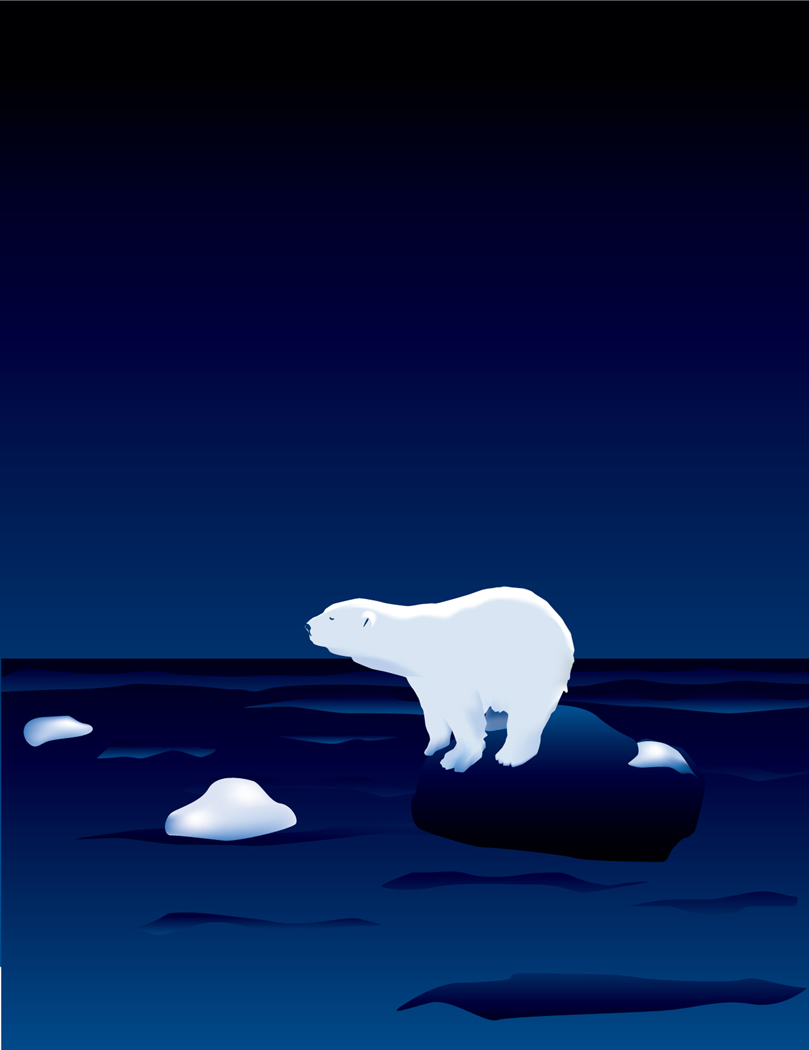
For those who are interested in exploring how much people’s lives have been affected by global warming, I would recommend  this source where you could find Dr. Mauro and his team’s research findings over the past few years.

Dr. Mauro was also the filmmaker of Qapirangajuq: Inuit Knowledge and Climate Change, the first Inuktitut-language film on people’ experience of adapting into global warming.

Image from Microsoft Images

Science of NHL Hockey

Hockey is back at long last so I thought I’d post a little hockey science.

The U.S. National Science Foundation has a series of videos in their multimedia gallery called the Science of NHL Hockey. For example, learn about Goals Against Average and other goaltending Statistics and Averages, or goalie Reflexes & Reaction Time, or watch one of the other videos:

Go Habs Go!

Watch the growth of Walmart and Sam’s Club, 1962-2010

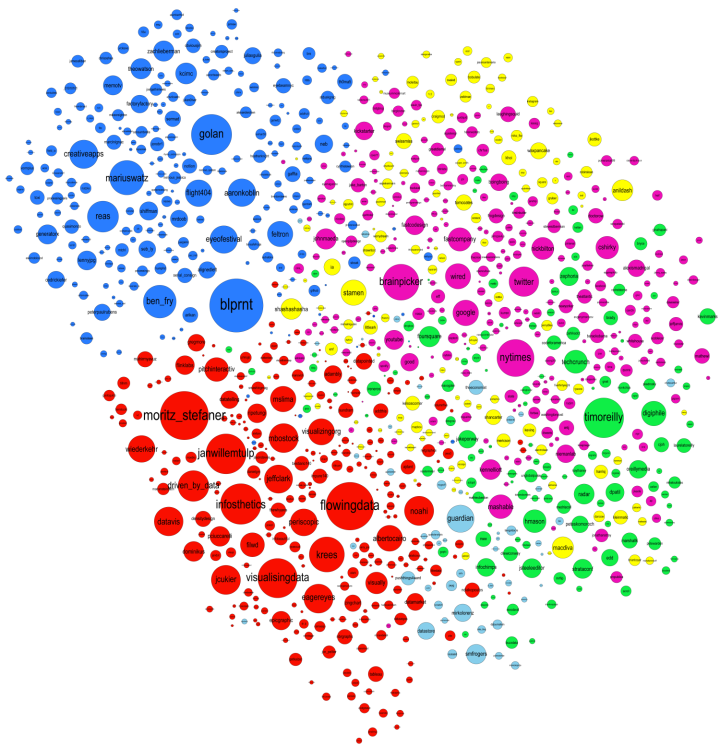
Sometimes you just have to “see” the numbers to believe them. Walmart has to be one of the most ubiquitous big-box stores in North America. When it comes to how many retail outlets there are, there’s really no number that would surprise me. But if you translate that statistic into a cool data visualization map, I’m blown away. Check out this video from FlowingData where you can watch Walmart “spread like wild fire” across the US.

Image from www.neoformix.com

Transparent soils

Researchers from the James Hutton Institute and the University of Abertay Dundee have created a transparent soil which allows the roots to grow “as exactly as they would in normal soil.” The advantage of this new soil is that observers are able to study roots in detail through this “see-through” soil. It was anticipated by the researchers that this soil would have an impact on many disciplines that are associated with interactions of plant roots and soils.

Read more at As clear as mud: Researchers unveil transparent soil that really could change the way we look at plants

Image from Microsoft Images

Twittering from outer space

Canadian astronaut, Chris Hadfield, has been tweeting about his experience living and working on the International Space Station, which orbits the Earth 16 times per day.  He flew to space on December 19th and will be returning to Earth in May.  To follow Chris Hadfield in space, visit: https://twitter.com/Cmdr_Hadfield

For information about his mission, read the Canadian Space Agency Mission Blog

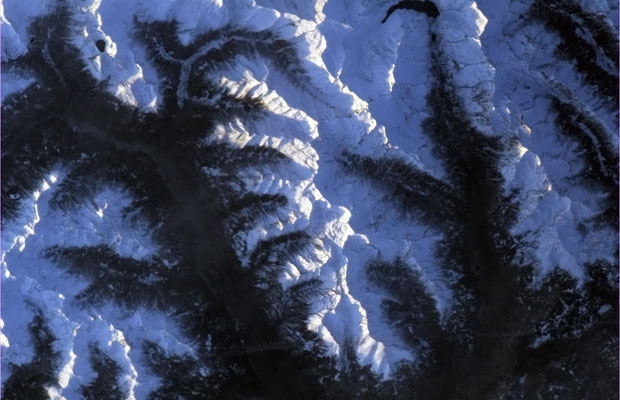
Photograph of Europe’s Alps from Chis Hadfield, which was taken on New Year’s Eve from the International Space Station

A look at 2012’s scientific achievements

In the latest issue of the New Scientist magazine, there is an article that briefly summarizes last year’s discoveries and debates in the physical sciences.  These were:

1- “Beyond Higgs: Deviant decays hint at exotic physics” [read more]

2- “Neutrino speed errors dash exotic physics dreams” [read more]

3- “If you want to be president, hire geeks not pundits” [read more]

4- “Why physicists can’t avoid a creation event” [read more]

5- “Fiendish ‘ABC proof’ heralds new mathematical universe” [read more]

6- “Death-defying time crystal could outlast the universe” [read more]

7- “Truth of the matter: The Majorana particle mystery” [read more]

8- “Quantum measurements leave Schrödinger’s cat alive” [read more]

9- “US judge rules that you can’t copyright pi” [read more]

10- “Move over graphene, silicene is the new star material” [read more]

Image from Microsoft Office Clipart