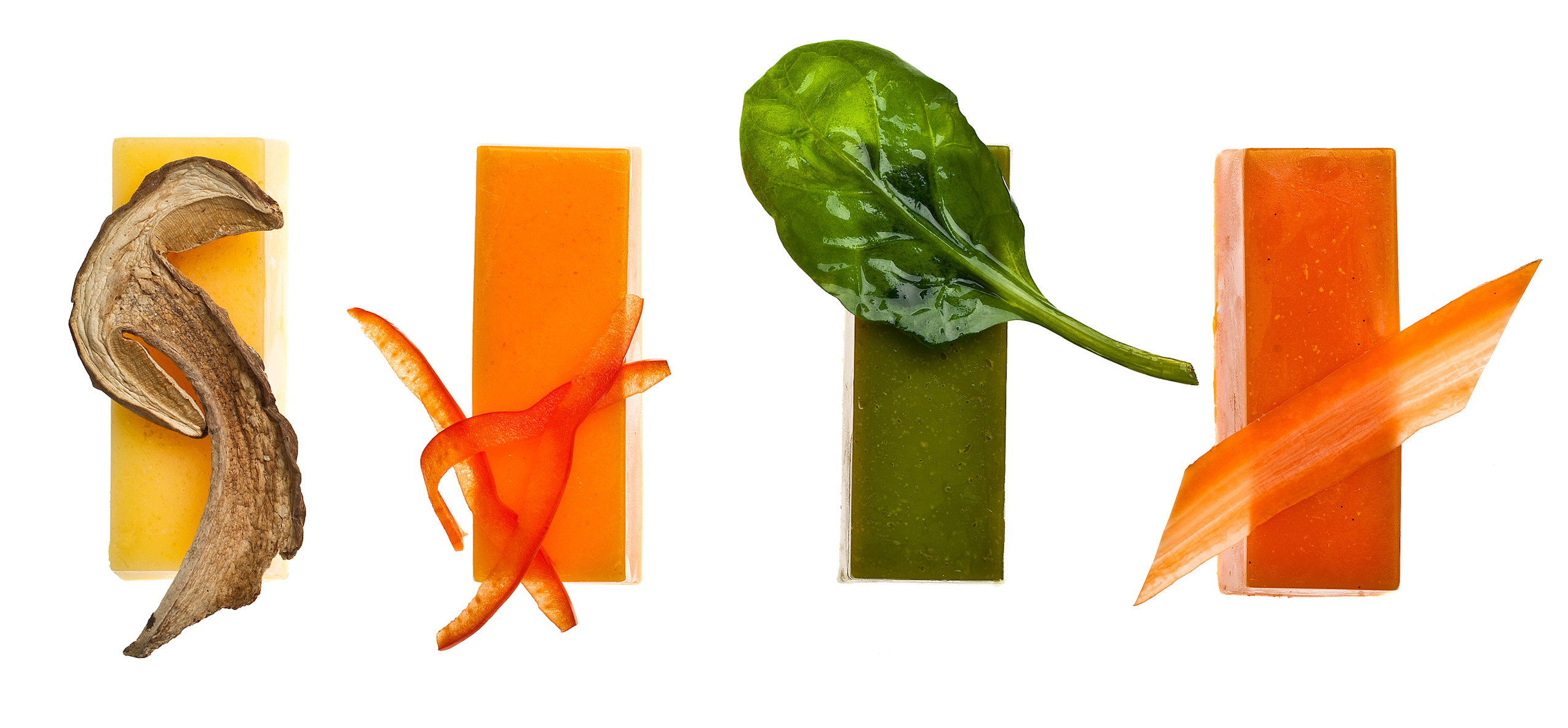
Modernist Cuisine at Home

I hope that everyone enjoyed the holidays. Classes do not start until next week but for those of you with some time on your hands we do have Orientation sessions going on at Schulich Library, along with workshops on EndNote or Refworks citation management software. They are really worth your while (just saying).

I outdid myself this year on the sheer number of resolutions but I did get one gift, Modernist Cuisine at Home, that may get me motivated to start cooking. The book is a follow-up to Modernist Cuisine: the Art and Science of Cooking, a whopping six-volume set with 2,400 pages, with a team of scientist and chef authors led by Dr. Nathan Myhrvold, the first chief tech­nol­ogy offi­cer at Microsoft and all-around genius. Co-author Maxime Bilet was at the Food Science 25th Anniversary Symposium at McGill in 2012.

I was drawn to Modernist Cuisine for the science and technology side to cooking but I fell in love with the images and the challenge of the recipes. The full set is not only hefty but it comes with quite a price tag so I was excited to see that they made an addition to the Modernist Cuisine family with a reasonably priced, although still quite weighty, volume. To decrease the number of takeout meals I eat in a week I hope to spend more time in the kitchen, exploring the gadgets I have collected over the years, with my new book in hand.  Wish me luck.

If you’d like to take a look at the full Modernist Cuisine: the Art and Science of Cooking there is a copy at the Macdonald Campus Library. Request pickup at the McGill Library of your choice.

Happy New Year!

Image from Modernist Cuisine
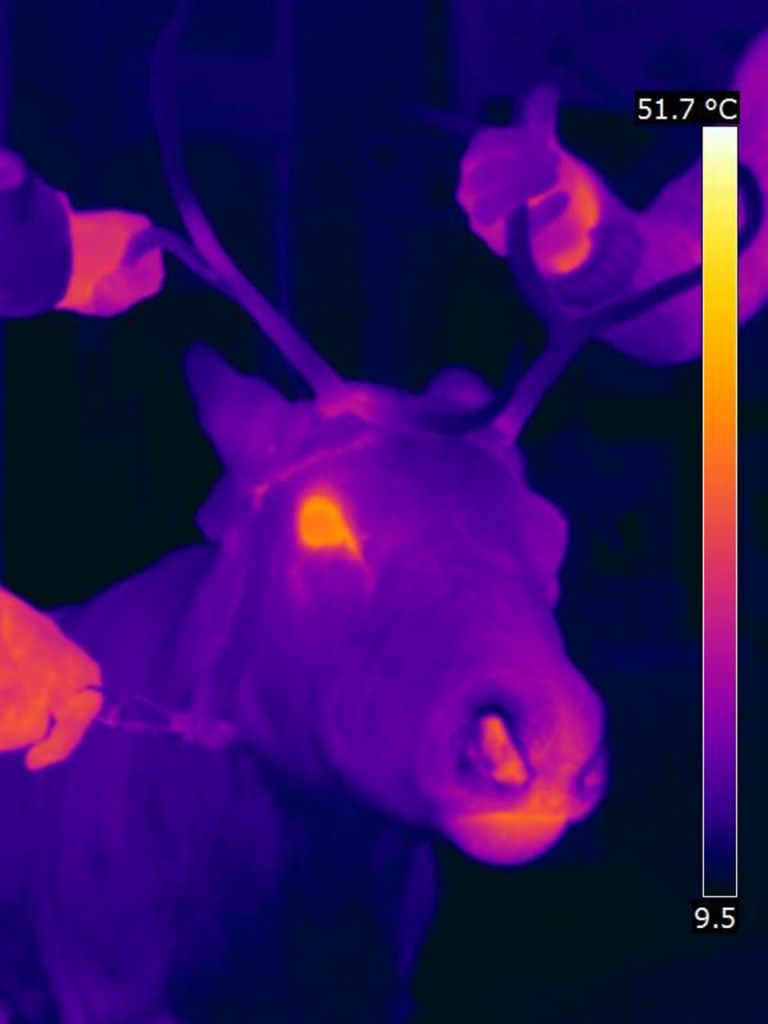
With thanks to Santa for his enthusiastic support

In keeping with the holiday theme, here is an observational study published just days ago in the British Medical Journal (BMJ) on why Rudolph’s nose is red. They used a hand-held video microscope to measure blood flow.

Conclusions The nasal microcirculation of reindeer is richly vascularised, with a vascular density 25% higher than that in humans. These results highlight the intrinsic physiological properties of Rudolph’s legendary luminous red nose, which help to protect it from freezing during sleigh rides and to regulate the temperature of the reindeer’s brain, factors essential for flying reindeer pulling Santa Claus’s sleigh under extreme temperatures.

Happy holidays, from all of us at The Turret!

Image from BMJ

Journeys into Geography

This year I’ve spent a lot of time at Department of Geography and the Geographic Information Center on the 5th floor of Burnside Hall. While helping students find maps, data, and literature, I received a common question from people outside of Geography. That was, “I am not quite interested in my subject and this [the application of GIS data and software to her research] makes it exciting…Should I switch to Geography?” I am not a geographer, so I cannot tell you exactly what a geographer does and what makes this profession appealing. However, I was lucky enough to come across the following video which might be able to answer your question.

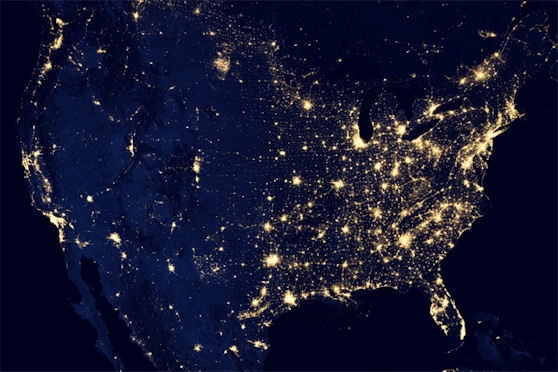
“Unlike humans, the Earth never sleeps”

Words are hardly necessary here because the image says it all. When I first saw this I thought it was fake or enhanced in some way. I was wrong. It’s actually “[a] global composite image, constructed using cloud-free night images from a new NASA and National Oceanic and Atmospheric Administration (NOAA) satellite, [and it] shows the glow of natural and human-built phenomena across Earth in greater detail than ever before.” Read more about this image and how it was created here.

Image courtesy of www.science.nasa.gov

This article has been retracted

Here is an interesting site, Retraction Watch, that documents papers that are pulled from published scientific journals. Papers or authors can be withdrawn from the literature for various reasons (fraud, misconduct, errors, etc.). Their tagline is “Tracking retractions as a window into the scientific process.” For example, they recently covered article retractions due to faked peer-reviews using Elsevier’s editorial system. Check it out.

There is a new service called CrossMark from CrossRef, the organization that provides Digital Object Identifiers (DOIs). The goal is to have a CrossMark logo on digital documents (Web or PDF) that links to information about corrections, changes, and withdrawals. Be sure to click on the logo when it appears.

A prize-winning galaxy photo

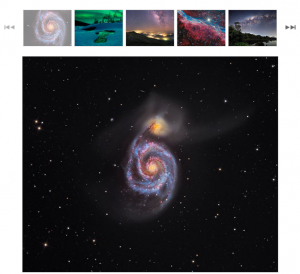
Are you wondering what it is in this image? It is “a spiral arm of the Whirlpool Galaxy grazes the light of a smaller companion galaxy that’s slowly being torn apart by its neighbor’s gravity.”

This photo won Australia’s Martin Pugh top prize in the 2012 Astronomy Photographer of the Year competition run by the U.K.’s Royal Observatory Greenwich. Also wonder what the blue, pink, and reddish things are in the big arm? Read more at here.

Zip it!

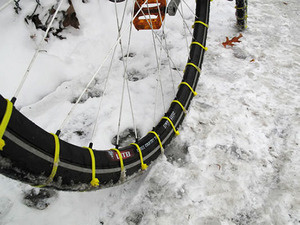
I just recently retired my bike for the season. It’s true, the roads are not icy or covered in snow…yet. So I do feel like a bit of a wimp for walking and taking the Metro when I could be cruising to work in 15 minutes on my trusty Peugeot. However, I will have to get used to the longer/less convenient commute, because I’m not the girl who gears up with goggles and snow pants and shreds through downtown Montreal mid-January! I want to be though. So with that in mind, I started researching cheap and easy ways to winterize my bike for next year (I need substantial time to get used to the idea) and I came across this great little invention: zip tie snow tires! Fritz Rice, the man behind the zip tie snow tires idea, has this to say: “I can accelerate, brake, and corner with aplomb, even on the vile snowpack/sheet ice mix the plows leave in the bike lanes. The zip ties dig nicely into the hardest packed surfaces, but they’re thin enough not to bounce the bike around at low speed or on short pavement sections.” Simple and effective. A great combo. Read more here.

Image courtesy of ca.gizmodo.com