“Natural Disasters – Live from the MOOC’s Epicentre” Event Rocks Schulich Library!

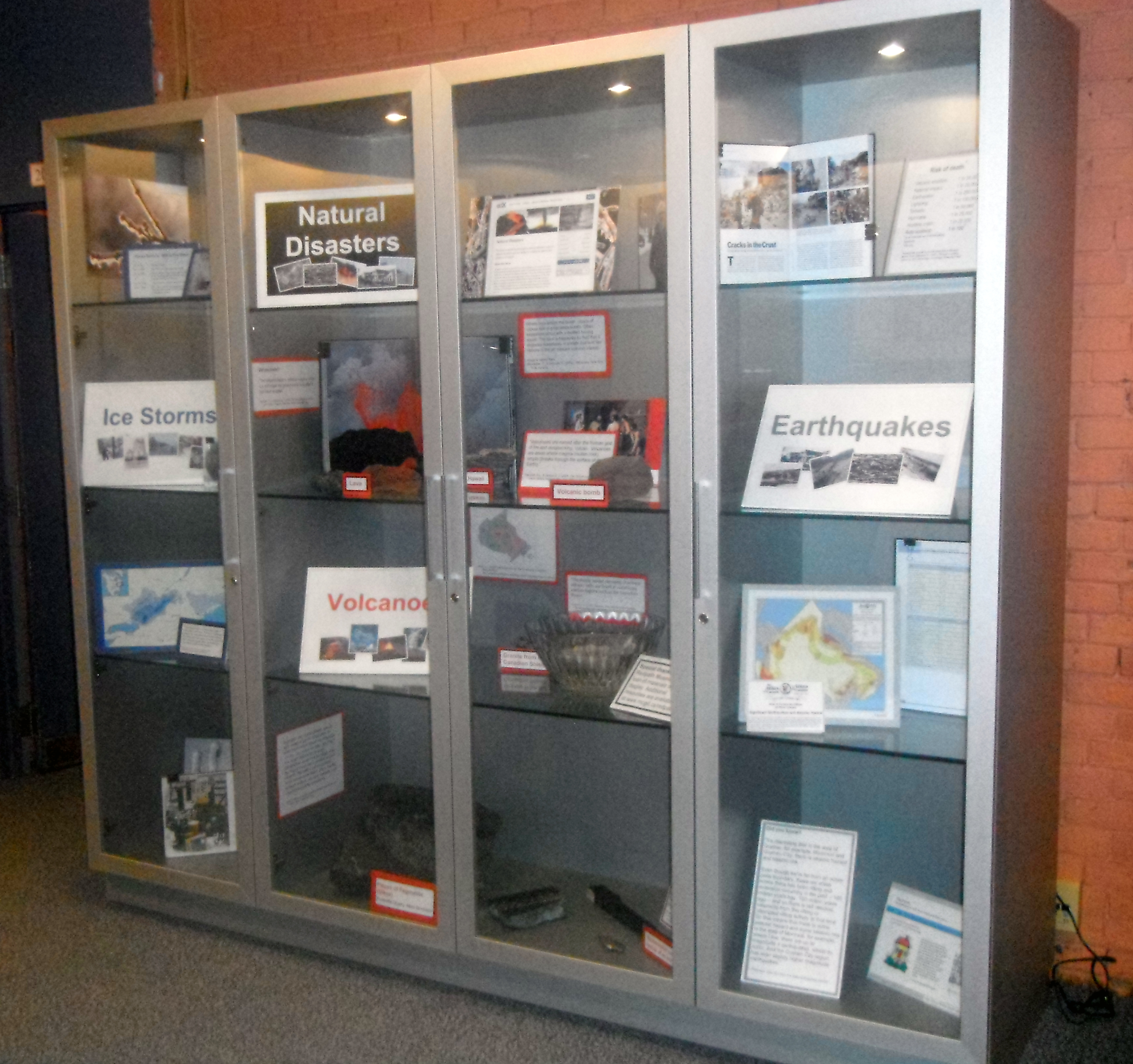
Natural disasters display

Despite a risk of severe thunderstorms (very fitting for the evening’s theme!), about 50 participants braved their way to Schulich Library of Science and Engineering on Tuesday night for “Natural Disasters – Live from the MOOC’s Epicentre!” to hear all about Montreal-area natural disasters. A big thanks to everyone who joined us, and an even bigger thanks to Professors John Stix and John Gyakum for presenting loads of information on different types of natural disasters and their likelihood of taking place in Montreal. Their presentation was delivered in a conversational, fact-filled and thought-provoking style that inspired the audience.

So what natural disasters could happen here? Earthquakes, ice storms (of course!), and even hurricanes are all possibilities. Even though Professor Stix confirmed that Mount Royal isn’t a volcano, he did recount a dream he once had that Mount Royal erupted and lava came flowing down the middle of campus! (This just goes to show you the kind of things geologists dream about!) The professors also talked about increased risk of natural disasters due to human activities (such as the increased chances of extreme weather events due to rising CO2 emissions from the combustion of fossil fuels and the increased likelihood of earthquakes from fracking to obtain natural gas). Professor Gyakum showed a video that gives the analogy of steroid use by baseball players to explain how climate change works (available here). He also explained that increased water vapor in the atmosphere caused by increased CO2 emissions ups the chances of more extreme weather, such as ice storms in Montreal. We are, after all, in one of North America’s freezing rain capitals. So make sure to keep those candles and bottled water handy this winter!

Their talk generated a lot of questions such as: Is there a risk of Yellowstone erupting anytime soon? Professor Stix says it is a very active geologic area, which may explain this recent news story . However, he also said “I don’t lose sleep over it.” Another participant asked: Generally, how prepared are Montreal’s buildings for an earthquake? Members of the audience concluded that we are not so prepared, especially considering the number of old buildings we have here.

In case you missed the event, you can always come check out the Natural Disasters display with information, photos and specimens related to ice storms, volcanoes and earthquakes. It is located on the main floor of the Schulich Library and will be up until, at least, the end of summer.

Finally, a special thank you to Teaching and Learning Services and Ingrid Birker from the Redpath Museum’s Science Outreach and Public Program for helping to make the evening a success.
Natural Disasters: Live from the MOOC’s Epicentre!

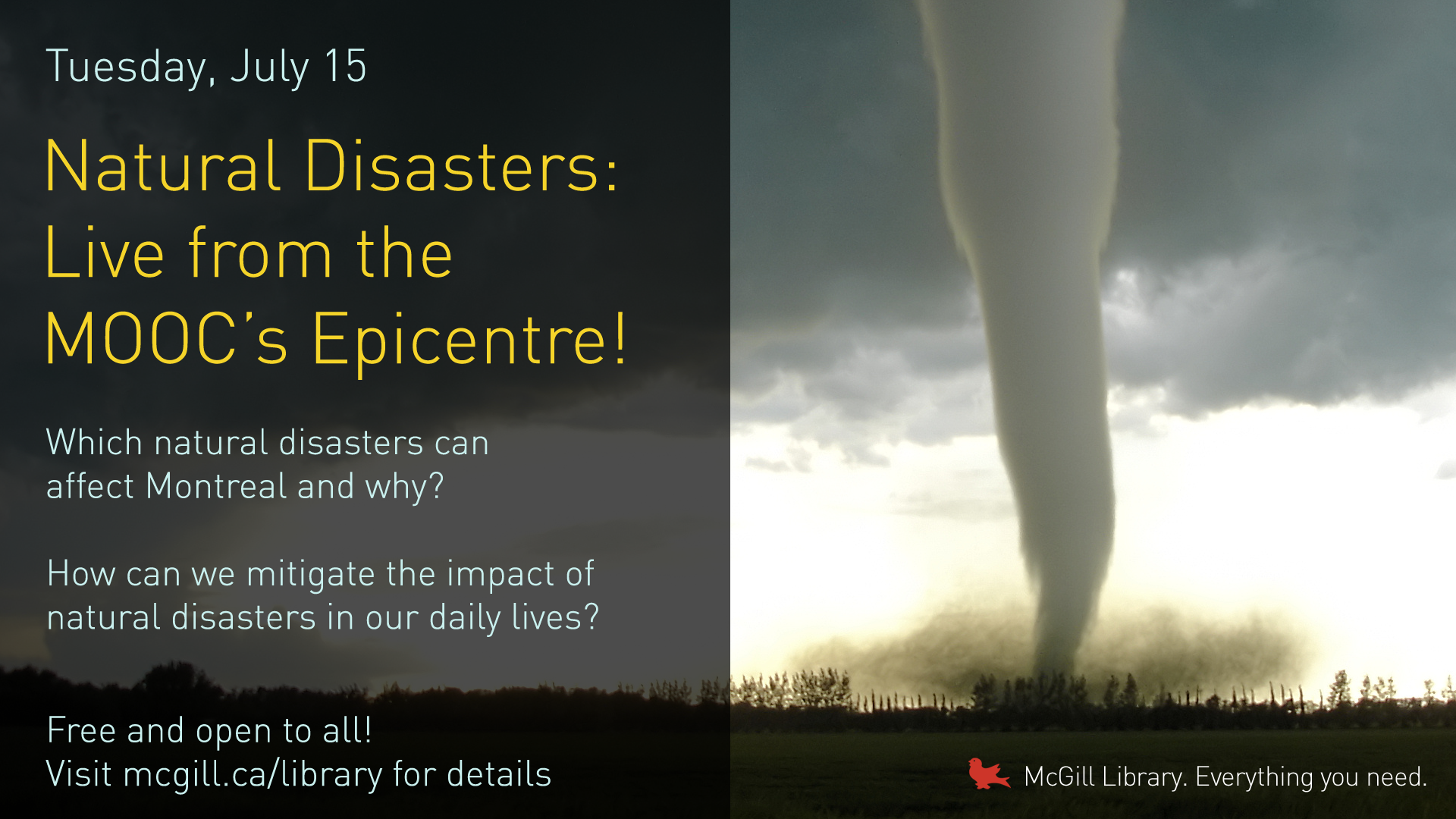
350-public-mooc-natural-disasterAs you may have already heard, there is a MOOC currently being offered on Natural Disasters, which is taught by Professor John Gyakum and Professor John Stix. Related to this, the professors will be giving a talk about natural disasters in the Montreal area. This will include why certain disasters would not happen here and how we can mitigate the impact of natural disasters on our daily lives. They will also be answering your questions about natural disasters.

This event will be held on Tuesday, July 15th from 6:30-8:30pm in the Schulich Library of Science and Engineering. Refreshments will be served.

All are welcome to attend. Registration is required. Please visit http://bit.ly/montrealepicentre to register. I hope to see you there!

Catch the Next Tsunami: Natural Disasters MOOC Starts Tomorrow!

natural_disastersMcGill is about to launch ATOC185x: Natural Disasters, its second MOOC (Massive Open Online Course), tomorrow and you can register here! The course is publicly available to anyone with an internet connection and interest in some of the most pressing environmental questions of our time:

  • What makes certain areas more susceptible to earthquakes, ice storms, hurricanes, tornadoes and volcanoes?
  • What factors are currently increasing the vulnerability of the world’s population to natural disasters?
  • Do natural disasters happen in an isolated manner or can we predict them?
  • How can we work together to better mitigate the impacts of natural disasters in the future?

Following in the footsteps of McGill’s first MOOC – “Food for Thought” that kicked off in January 2014 and saw over 30,000 people register, this second MOOC given by volcano expert John Stix from Earth and Planetary Sciences and ice storm expert Professor John Gyakum from Atmospheric and Oceanic Sciences continues to offer education for the masses on important topics that affect all our lives. Want more information on MOOCs? Check out the library’s MOOC subject guide and make sure you catch this next tsunami that is ATOC185x: Natural Disasters!

Image from www.mcgill.ca

The Biggest Transition

Starting undergraduate studies is definitely one of the biggest transitions in anyone’s life. This gets even more significant when you come from a different country. As an international student, I faced a lot of changes as well. The biggest being to stay alone – away from your family. Change is life’s biggest truth, regardless of whether one accepts it or not. But one can only take a certain amount of change at a time.

Change is life’s biggest truth, regardless of whether one accepts it or not.

I arrived at Montreal two days after the beginning of the semester. As with many other international students, I had some delays in getting my visa. Luckily I had my uncle over here with whom I stayed for the first week. I was overwhelmed by the sight, when he dropped me off at the Roddick Gates for the first time. I could see the McGill flag flying at the top of the arts building. I had a feeling that I came to the right place.

Things started to move on pretty fast afterwards. Honestly, you don’t have much time to fit in at McGill. The professors go into full gear, assignments keep on piling up and exams start to knock on your door sooner than you even realize. It’s good in a way that you don’t have time to sit and feel bad for being away from your family. Well, I never did. Friends, in this case are a crucial element. It’s always nice to have people who are in your shoes. We supported each other in our bad times, shared our happiness and learned to overcome obstacles together. This really makes the transition much smoother than one can imagine.

It has been one semester now. In fact, it’s almost the end of my second semester. When I think of the first days, it feels like as if it was just yesterday! I can see myself to be quite a changed person. I can live independently. Never thought of that before; can’t believe it even now. It’s the beginning of a new life. And yes, I accepted the change.

Superfast scientist

Associate Professor Bradley Siwick, a Canada Research Chair in Ultrafast Science, delivered a Cutting Edge Lecture in Science in January (I’m falling behind on my posts!): Lights, action, camera – Making movies of molecules and materials. I have a background in microbiology so I was keen to hear about some of the tools and techniques that he has been using in his lab.

During his talk he pointed out how the 20th century was all about the development of new tools, like the electron microscope (one of the greatest Canadian inventions, as voted on by CBC watchers, just six spots behind the poutine). In the 21st century we can expect to see scientists pushing the limits of these tools. His research is taking a novel approach to electron microscopy, using femtosecond lasers to produce ultrashort/ultrafast pulses.

Visit Bradley Siwick’s research site to learn more.

I highly recommend attending one of the upcoming lectures as well, if you get the chance.

Welcome Pauline!

The Turret is going to see a few new bloggers this semester, undergraduate students taking the Communication in Engineering course here at McGill.

Pauline

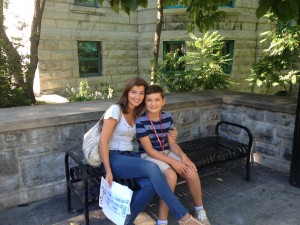
To kick this off, it is my great pleasure to welcome Pauline (and her little brother).

We are all looking forward to hearing what Pauline will share with us on The Turret (no pressure!).

Don’t Get Bitten by One of These This Summer!

robots

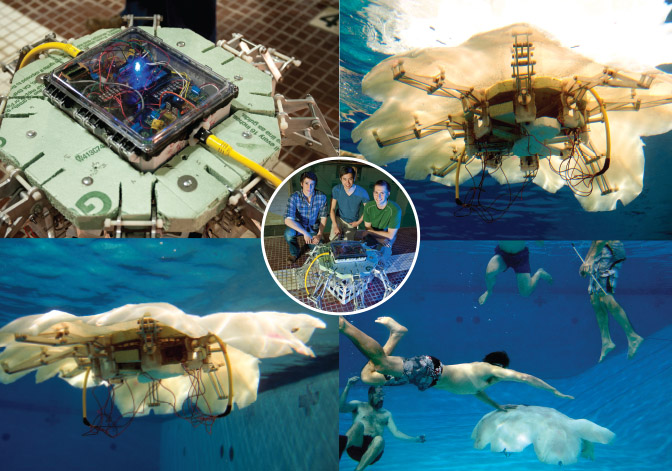
Watch where you’re swimming while on vacation this summer so as not to run into one of these giant jellyfish!  Mechanical engineers at Virginia Tech have been busy developing an autonomous underwater robot that looks just like a jellyfish and acts like one too.  It moves about just like the real thing in all depths and temperature ranges.  The 170-pound robo-jellyfish prototype named Cyro can be used to “monitor ocean currents or enemy combatants, study aquatic life, or map the sea floor” (Prism Magazine).  The project is funded by the US Navy.

Likewise, here at McGill, engineers from McGill’s Mobile Robotics Lab, School of Computer Science and the Centre for Intelligent Machines, along with partners at York University and Dalhousie University, have been busy developing their own autonomous underwater robot called the AQUA Robot that uses its six flippers to swim.  Like Cyro, the AQUA Robot can be used for studying marine habitats.  It “can explore underwater environments and gather data with minimum disturbance of the indigenous marine life” (The AQUA Project).

Watch how it moves here.

Perhaps you’ll have a chance to see the AQUA Robot live in action by participating in McGill’s Barbados Field Study Semester where it is known to swim in the clear, warm waters off the coast of the Bellairs Research Institute in Holetown, Barbados.

Even if your vacation doesn’t take you to any exotic locations this summer, you might still have a chance to spy the AQUA Robot at the McGill Athletics swimming pool where it performs its tests.  And if that’s not enough, you can even buy one of your own!

Happy and safe swimming this summer with or without the underwater robot!

Image from Prism Magazine

Women, Minorities, and Persons with Disabilities in Science and Engineering

In the spirit of McGill’s second Disabilities Awareness Week, I thought that I would bring your attention to this site from the U.S. National Science Foundation (NSF): Women, Minorities, and Persons with Disabilities in Science and Engineering. This site is where you can find statistics on women, minorities, and persons with disabilities in science and engineering education and employment. They write a report every two years, mandated by the Science and Engineering Equal Opportunities Act, and have made the latest digest available for download, along with the corresponding data files. The themes of the digest are enrollment, field of degree, employment status, occupation, academic employment, and persons with disabilities.

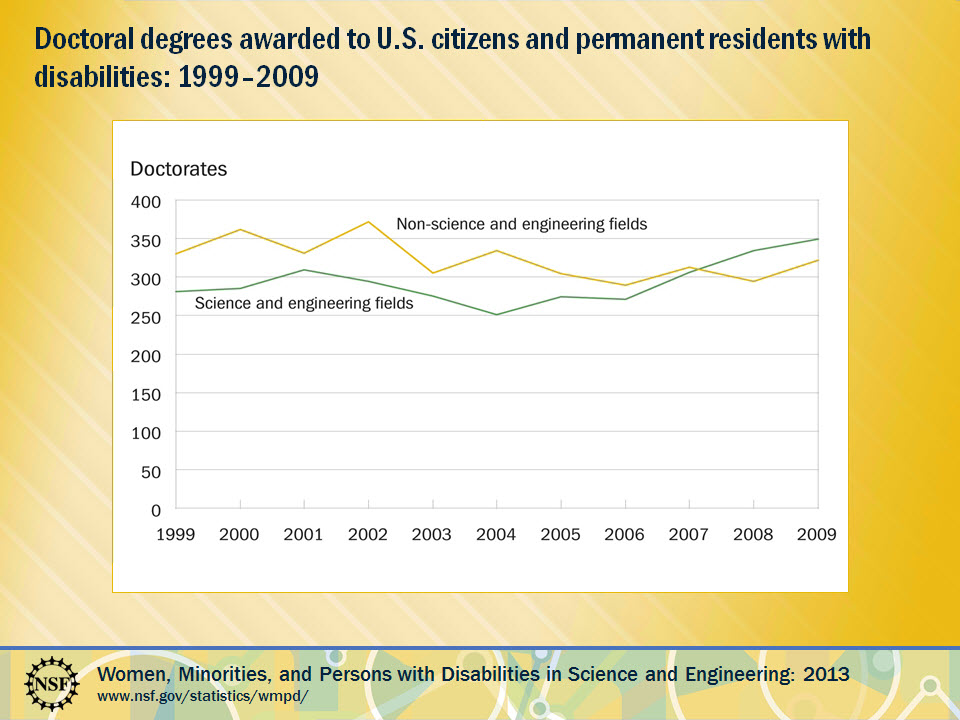
According to the NSF, persons with disabilities are underrepresented in the science and engineering workforce compared to the population as a whole. However, the graph below shows that since 2008, U.S. citizens and permanent residents with disabilities have earned more science and engineering doctorates than in non-S&E fields.

NSFfig6b

Calling all citizen scientists

GalaxyZoo

There is room for everyone in science and researchers are harnessing the enthusiasm of everyday people (not to mention their free time) to work on projects.

Galaxy Zoo is perhaps the most famous example of citizen science, with over 200,000 volunteers classifying galaxy images taken from a robotic telescope. Citizens have always played an important role in astronomy but now anyone can contribute without buying expensive equipment. We humans are needed to describe the images but the task is too large for a researcher or group of researchers to take on. Thus far over 150 million galaxies have been classified by volunteer astronomers (zooites) and a few have gone on to make really neat discoveries.

A more local example is Phylo, a citizen science project from McGill. A lot of these projects are actually games that people can play (yes, science can be fun!) and this one uses your pattern recognition skills to solve DNA puzzles in order to learn more about gene mutations and genetic disorders.

I urge you to find a citizen science project that interests you. Take a look at this list from Scientific American. There are a lot of weather or nature watching options (Snowtweets, RinkWatch, ZomBee Watch, SubseaObservers). There is even an Open Dinosaur Project.

Happy exploring!

McGill videos on YouTube and iTunesU

I like posting videos in The Turret, like Minute Physics, TED Talks, and old scientific communication videos (I’m starting to think that I watch a lot of videos), but thus far I have neglected to talk about those created right here at McGill.

For example, in this video from the Soup & Science series Prof. Lehner from Geography poses the question: how much water do you use per day?

Videos from students and researchers are available on McGill’s YouTube channel or iTunesU (this link will launch iTunes).

Happy viewing!