This article has been retracted

Here is an interesting site, Retraction Watch, that documents papers that are pulled from published scientific journals. Papers or authors can be withdrawn from the literature for various reasons (fraud, misconduct, errors, etc.). Their tagline is “Tracking retractions as a window into the scientific process.” For example, they recently covered article retractions due to faked peer-reviews using Elsevier’s editorial system. Check it out.

There is a new service called CrossMark from CrossRef, the organization that provides Digital Object Identifiers (DOIs). The goal is to have a CrossMark logo on digital documents (Web or PDF) that links to information about corrections, changes, and withdrawals. Be sure to click on the logo when it appears.

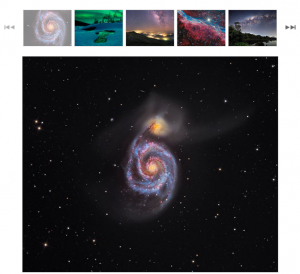
A prize-winning galaxy photo

Are you wondering what it is in this image? It is “a spiral arm of the Whirlpool Galaxy grazes the light of a smaller companion galaxy that’s slowly being torn apart by its neighbor’s gravity.”

This photo won Australia’s Martin Pugh top prize in the 2012 Astronomy Photographer of the Year competition run by the U.K.’s Royal Observatory Greenwich. Also wonder what the blue, pink, and reddish things are in the big arm? Read more at here.

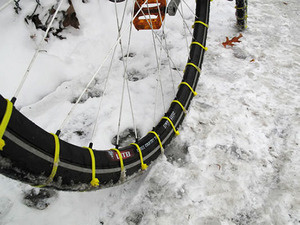
Zip it!

I just recently retired my bike for the season. It’s true, the roads are not icy or covered in snow…yet. So I do feel like a bit of a wimp for walking and taking the Metro when I could be cruising to work in 15 minutes on my trusty Peugeot. However, I will have to get used to the longer/less convenient commute, because I’m not the girl who gears up with goggles and snow pants and shreds through downtown Montreal mid-January! I want to be though. So with that in mind, I started researching cheap and easy ways to winterize my bike for next year (I need substantial time to get used to the idea) and I came across this great little invention: zip tie snow tires! Fritz Rice, the man behind the zip tie snow tires idea, has this to say: “I can accelerate, brake, and corner with aplomb, even on the vile snowpack/sheet ice mix the plows leave in the bike lanes. The zip ties dig nicely into the hardest packed surfaces, but they’re thin enough not to bounce the bike around at low speed or on short pavement sections.” Simple and effective. A great combo. Read more here.

Image courtesy of ca.gizmodo.com

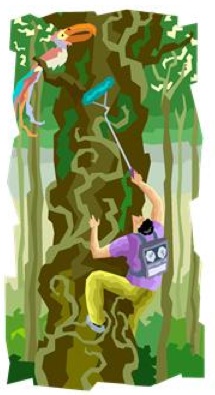
Extreme scientific analysis

Discoblog is one of my favorite blogs.  It reports on weird, humorous, and astonishing studies that have been published.  Here are links to some posts about studies that the Disco-bloggers labeled, “analysis taken too far”:

Image from Microsoft Office Clipart

Windows 8 apps

April recently wrote a post about designing your own applications for iphone. On the lately released Windows 8, getting apps is more like the way we use for an Apple device. Instead of the Apple store, we get apps from the Microsoft store either for free or for a payment. Read more at here.

If you are interested in learning more about Windows 8, here is a review.

NASA news: Mercury water ice

NASA held a news conference today, unveiling new evidence for water ice at Mercury’s polar regions from the MESSENGER spacecraft.

MESSENGER is an acronym for MErcury Surface, Space ENvironment, GEochemistry and Ranging. Powered by two solar panels, it was launched August 3, 2004, reaching Mercury’s orbit March 18, 2011 (UTC).

Mercury has a temperature range of 610 degrees Celsius: 427 degrees on the side closest to the Sun, and -183 degrees on the night side. There are crater floors around Mercury’s poles that are in persistent shade, since its rotation axis does not tilt. NASA’s latest data points to water ice and other frozen deposits in these craters.

The red areas in this image are the permanently shadowed craters of Mercury’s north pole, with the polar deposits in yellow.

Design your own apps

I came up with an idea for an iPhone app on my way home from work so I decided to set my programmer husband on the task.

He registered as an Apple developer at developer.apple.com. You do need a Mac to develop an app because Xcode, the program used to write apps in Objective-C, only runs on the Mac OS.

If you are interested in designing an application and distributing it through the App Store you can follow the iPad and iPhone app development course from Paul Hegarty at Stanford on iTunes U. Assignments and PowerPoint slides are included. I watched the first lecture and learned a little about MVC (model view controller) design strategy. It assumes a certain comfort level with object-oriented programming, which I do not have, so he pretty much lost me at the introduction to Objective-C.

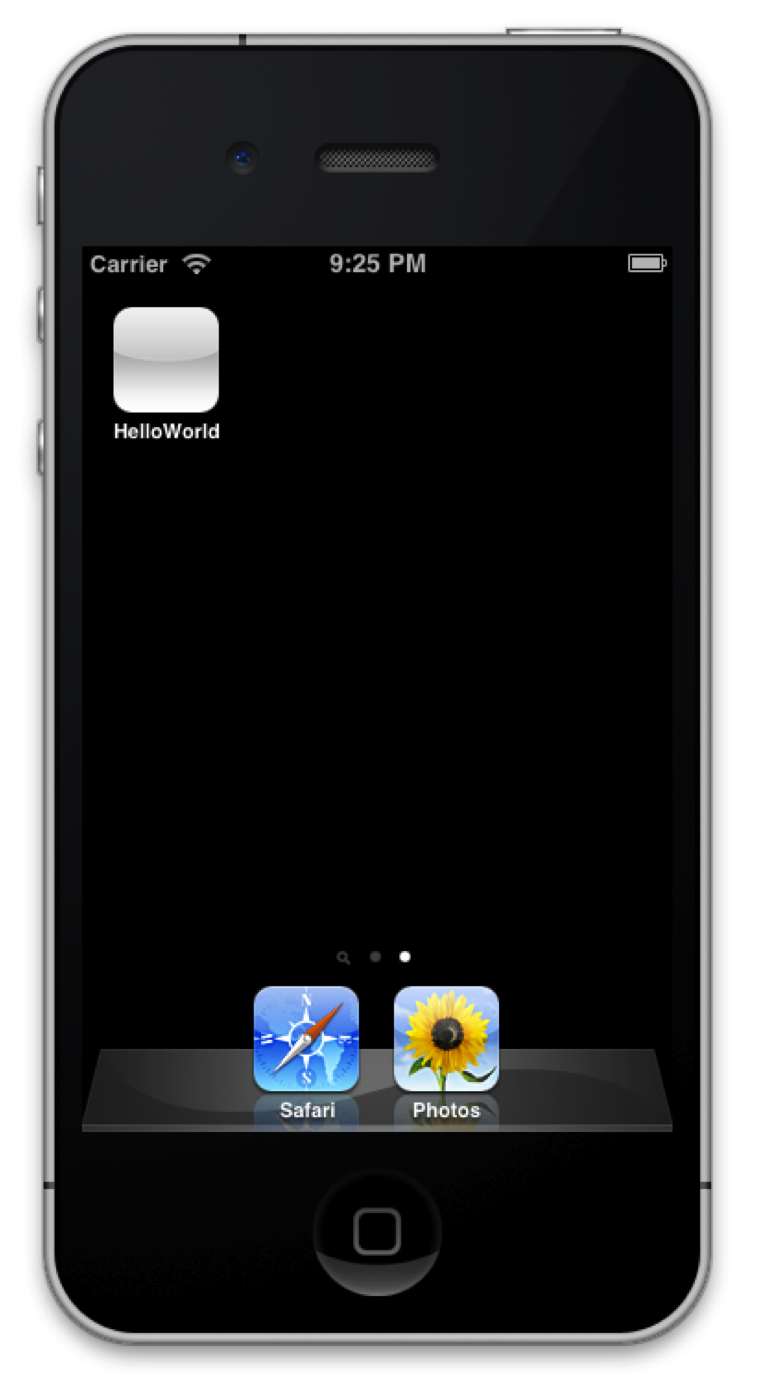
This image has Paul’s first ever app on the simulator that comes with Xcode.

Stay tuned for more homegrown apps updates!

The Journal of Visualized Experiments (JoVE)

Here at The Turret we like videos a lot. We assume our readers do too. What if I told you that there was a peer-reviewed (scholarly) video journal that publishes biological, medical, chemical and physical research in a video format? Check out The Journal of Visualized Experiments (JoVE) through McGill’s journal subscriptions if you don’t believe me. McGill has select access to three of the six sections covered in JoVE: General, Neuroscience, and Immunology and Infection. It’s worth mentioning that each “video article” is accompanied by a textual equivalent with abstract, discussion, step-by-step instructions and a materials list. JoVE also won the “Best Original Content” award from the Library Journal earlier this month. Librarian approved!

Image from the JoVE website www.jove.com