Coursera: A Massive Open Online Course (MOOC) Source

Coursera recently announced that it had signed on with more than a dozen major educational institutions worldwide, including U of T, the only university from Canada. Coursera was created by two computer science professors at Stanford University earlier this year. The plan of Coursera is “to partner with the top universities in the world to offer courses online for anyone to take, for free”. The creators “envision a future where the top universities are educating not only thousands of students, but millions.”

The courses on Coursera contain lectures, forums, quizzes, assignments, and exams. The students will be able to join online discussion with classmates everywhere on the earth, submit their assignments, and get grades for free. Coursera has now 111 courses available which are categorized in Biology & Life Sciences, Business & Management, Computer Science, Engineering, Sciences, etc. Below is an example of a Coursera course, Software Engineering for SaaS, which is currently offered by Fox and Patterson, professors from UC Berkeley.

Other than Coursera, edX and Udacity are also known for offering MOOCs. The most influential MOOC so far is Stanford University’s computer science professor, Sebastian Thrun’s Introduction to Artificial Intelligence which drew more than 160,000 students who eventually received detailed grades and a class ranking.

Read more at The Massive Hype of MOOCs

Olympic fever

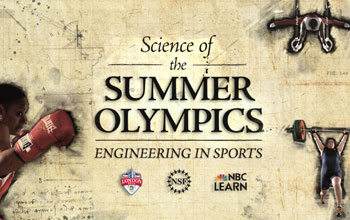
Science of the Summer OlympicsThe new video series, Science of the Summer Olympics: Engineering In Sports, is just what I needed to assuage my anticipation for the start of the London Olympic Games (just days away!).

This partnership between the U.S. National Science Foundation and NBC brings athletes and engineers together to share their experiences and perspectives. For example, you can learn about the biomechanics of 6 ft. 5 in. sprinter, Usain Bolt, or the design of the pool at the London Aquatic Centre that promises to maximize speed and minimize waves.

A trip to an ASCE monument of the millennium

During a trip to Chicago last week, I had occasion to see one of the American Society of Civil Engineers’ (ASCE) monuments of the millennium, the Chicago Wastewater System.  By the end of the 19th century, Chicagoans had heavily polluted the Chicago River by dumping all of their garbage in the water, which flowed into Lake Michigan, the source of the city’s drinking supply.  This caused deadly diseases such as cholera and typhus.  To solve the problem, the flow of the Chicago River was reversed, sending it in the opposite direction from Lake Michigan.

Here’s a brief documentary on the reversal of the Chicago River:

Curiosity Rover to discover whether Mars was once habitable

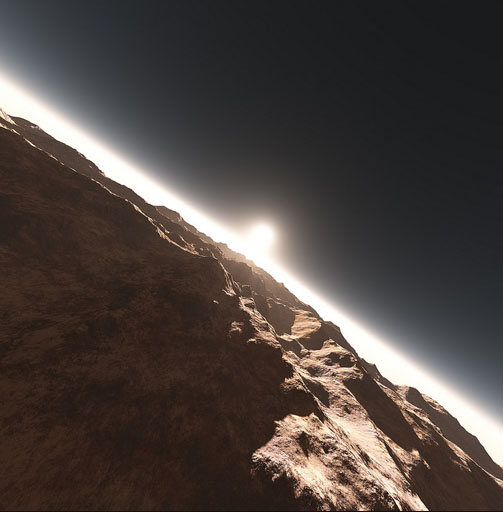
NASA’s new mobile Mars Science Laboratory, also known as the Curiosity Rover, will be launched on August 5th to study the rocks, soil, and atmosphere on Mars’ Gale Crater for signs of historical and current habitable environments.  A habitable environment contains water, energy, and carbon to support life.  Past missions have discovered the limited presence of water and energy on Mars, but none, so far, have found carbon in a form that can sustain life.

Curiosity’s purpose is to determine how to conduct a search for carbon, as well as find carbon.  The former will assist planetary scientists in further research, since they are uncertain about how to probe rock strata for biosignatures, whether on Earth or on Mars.

This month’s issue of Scientific American provides an overview of Curiosity’s mission and a step-by-step description of its landing sequence.

Image from Christopher Lotito

Air France Flight 447: the complete pilot transcript

At the beginning of July of this year, the French aviation safety authority BEA, presented its final report on the 2009 crash of an Air France flight from Rio to Paris that killed 228 people. Pilot error was found to be at fault. I apologize for the morbid topic. I know that accidents like plane crashes haunt people, and that against our better judgement, knowing full well that it’s safer to be in the sky at a safe cruising altitude with a reputable airline than it is to merge onto just about any highway at 100 kilometers per hour, some of us still get the jitters when we fly. If you’re anything like me, you stare out the window on takeoff and reflect on your own mortality. You might consider this an over-share, but it’s actually not as depressing as it sounds. It’s deep okay!

As well, if you’re anything like me, reading the full pilot transcript taken from the flight-data recorders, retrieved from beneath two miles of ocean, is absolutely fascinating. In December 2011, before the final report came out but after the black boxes were found, Popular Mechanics published this article with the full pilot transcript in French and English, with explanatory notes throughout. Perhaps this is not for the faint of heart, but it is for anyone interested in aviation, the automation of airplanes and the ensuing problems this presents for pilots and those who train and certify them, and of course the fallibility of both machines and humans.


What Impacts Research Choices?

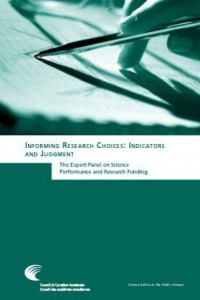
A recently released report by Council of Canadian Academies, Informing Research Choices: Indicators and Judgment, says that quantitative indicators, such as the number of publications and citation counts, cannot replace expert judgment when making decisions on allocating research grants.

Existing science assessment strategies can be categorized in many ways, including deliberative methods, such as peer review, and quantitative indicators, like publication and citation counts, numbers of researchers or students, research funding amounts, etc. “Quantitative indicators should be used to inform rather than replace expert judgment in the context of science assessment for research funding allocation.” The research panel reviewed the best practices worldwide and concluded that “the most promising strategies rely on a balanced use of quantitative indicators and expert judgment”.

The findings of this report will be used to devise a new budget allocation methodology for Natural Sciences and Engineering Research Council of Canada (NSERC)’s Discovery Grants Program. The current edition of Evaluation Indicators is available on NSERC’s website.

Adapted from Metrics can’t replace expert judgment in science assessments

· · · — — — · · ·

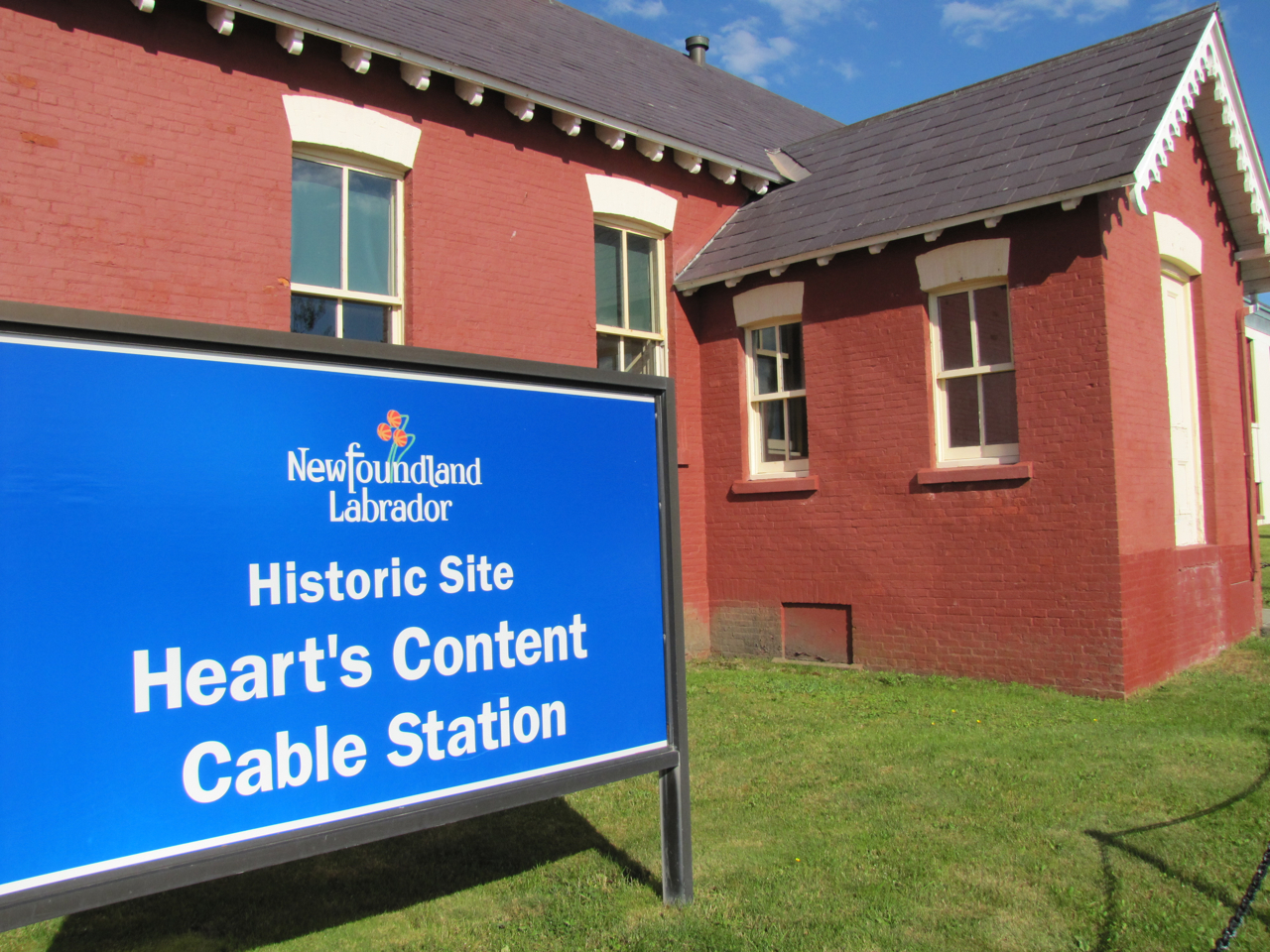
While in Newfoundland last week I stumbled upon this cable station and learned the story of a man who’s dream it was to run a cable clear across the Atlantic.

The Heart’s Content Cable Station is a provincial historic site, where, after a few mishaps, Cyrus Field’s telegraph cable reached out to Valencia, Ireland. Cables were already in place across America, which allowed for messages to be spelled out in Morse code (a series of dots and dashes) by telegraph, but before 1866 you would have had to wait patiently for weeks for messages to travel to Europe and back by sea (gasp!).

Learn more about the transatlantic cable and the mammoth ship that carried it, the Great Eastern, from PBS or Wikipedia.

Image by April Colosimo

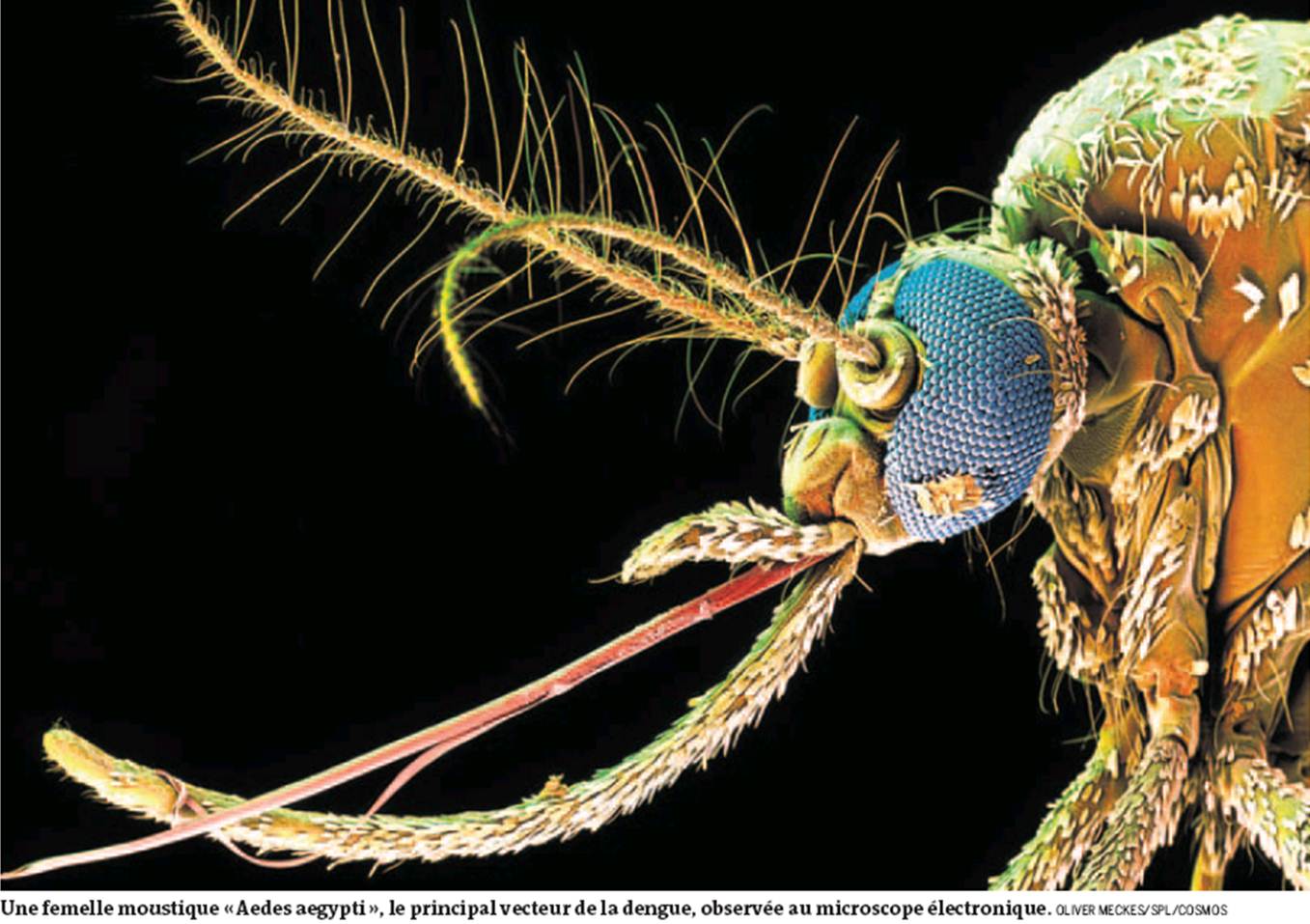
Transgenic Mosquitoes to Fight Dengue Fever

Brazil will produce 4M transgenic Aedes aegypti mosquitoes per week in order to fight the dengue fever.

“Dengue Fever is a virus spread by the bite of an infected mosquito. There is neither medication nor a vaccine to prevent Dengue Fever so effective measures to control the dengue mosquito Aedes aegypti are urgently required since the disease is becoming geographically more wide-spread, more prevalent and more virulent. The incidence of dengue has increased 30 fold in the last 50 years and, according to WHO, 2.5 billion people are now at risk. The severe form of dengue, known as Dengue Haemorrhagic Fever, was first recognized in the 1950s but has become has become a leading cause of hospitalization and death among children in Asian and Latin American countries.”

More information.

Image from: Le Monde Wednesday July 18, 2012 (p.6 section Planète).


Infrastructure100 Global Projects Report

“Presenting the Infrastructure 100 – report on the most exciting infrastructure projects from around the world, as selected by independent judging panels due to their scale, complexity, innovation and impact on society.”

“KPMG’s Global Infrastructure practice, in conjunction with Infrastructure Journal, is pleased to present the Infrastructure 100 – a showcase of the most interesting infrastructure projects from around the world.

Of those 100 projects – all shortlisted for their scale, complexity, innovation and impact on society – 10 have been highlighted by the independent judging panels as notable projects in different infrastructure sectors.”

Download the report.

Image from the Infrastructure100 Global Projects Report.

Center for Global Geography Education – A Collaborative Learning Resource for Undergraduate Studies in Geography

If you are a geography undergraduate student or an instructor teaching undergraduate courses in geography and related social and environmental sciences, you might find Association of American Geographers’ Center for Global Geography Education (CGGE) useful. There are a collection of six modules online: Global Climate ChangeGlobal EconomyNational Identity, Population and Natural Resources, Migration, and Water Resources.

Each module consists of a conceptual framework, regional case studies, and collaborative projects. The conceptual framework introduces students to the relevant concepts, theories, and analytical approaches in geography; case studies illustrate how geographic concepts, methods, and technologies can be used to investigate and solve problems in different regions; collaborative projects connect classes worldwide for online learning and discussions. Researchers (Baiio & Ray, 2011) found that the CGGE project had gained students “content knowledge” and “the enthusiasm for international cooperation”.

Baiio, W., & Ray, W. C. (2011). The challenges and rewards of an international undergraduate student learning interaction in geography. International Research in Geographical and Environmental Education, 20(4), 287-296. doi:10.1080/10382046.2011.619806

Image from AAG center for global geography education, retrieved July 9, 2012.