Ready, Set, Get Oriented!

It’s that time of year again! Dust off your book belts and make sure your alarm clock is in good working order because it’s Back to School! McGill Library is ready to ease you into the new academic year with a lot of fun and informative Library Orientation activities. Attend all three, on a drop-in basis: Library Tour, Getting Started and Finding the Right Stuff, at Schulich Library or any other McGill Library branch and receive a free USB bracelet! Here’s how you win:

  1. Pick up your Orientation Passport at any library branch, during Discover McGill Street Fest or at the Discover McGill Service Fair. We will also distribute these at the Tours and Workshops if you don’t already have one.
  2. Get your passport sticker after each session you attend.
  3. Once you’ve collected all three stickers, drop your passport off at any Library Information Desk to receive your free McGill Library USB memory bracelet!

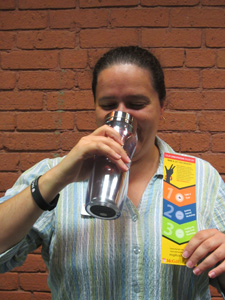
After each Workshop you attend at Schulich Library, your name is entered in a draw and you could win a nifty McGill mug. For a schedule of Schulich Library’s Tours and Workshops click here.

Don’t forget about The Amazing Library Race being held on Thursday August 30, from 3-5 pm.  For more information or to register click here. Please note that if you participate in the Amazing Library Race, you can earn a sticker for your Orientation Passport in lieu of a Tour. Sound good? See you at the finish line!

Image by Nikki Tummon

Have you Wordled yet?

Wordle is useful in helping you quickly find themes in any text that you need to read.  For example, you can use it to find themes in:

  • reports,
  • Web pages,
  • books,
  • dissertations,
  • journal articles,
  • database search results, etc.

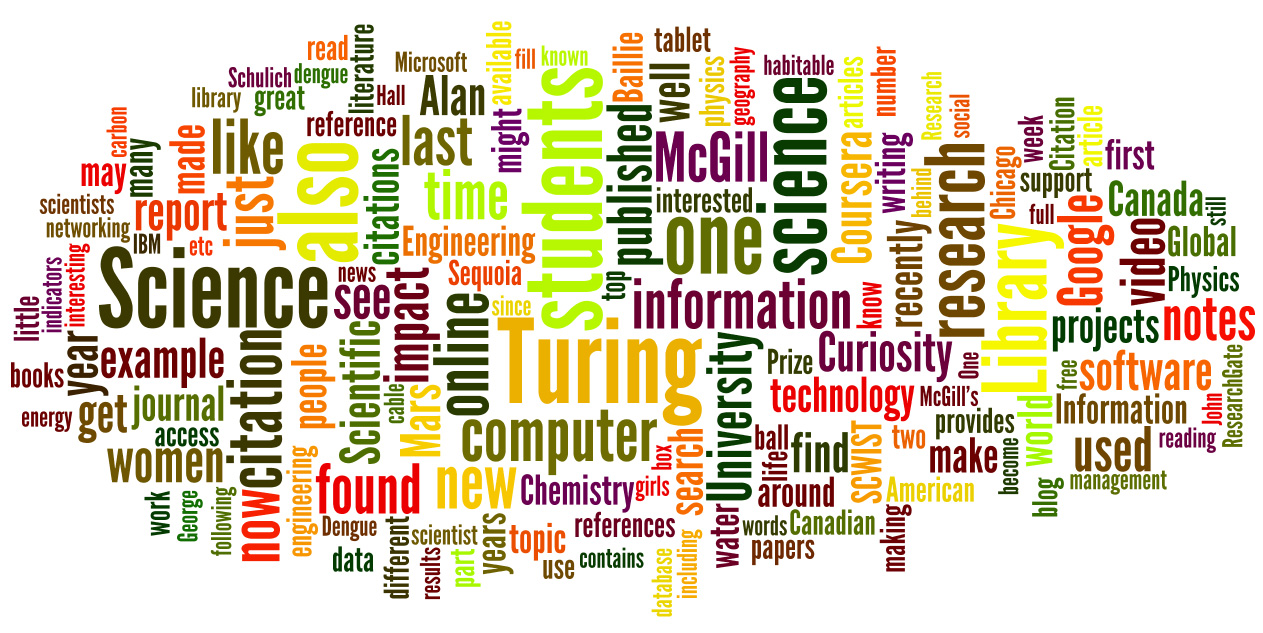
You just copy your text and paste it in Wordle to generate a word cloud that shows you, by default, the 150 most frequently mentioned words in your text.  The bigger the word, the more often it has been mentioned.

You can also use Wordle to visually summarize anything that you have written.  Visit Wordle and give it a try!

Image of a Wordle created from the text of this blog

Melting in the Arctic

Throughout the year, the U.S. National Snow & Ice Data Center in Colorado provides scientific analysis and daily image updates of sea ice in the Arctic Ocean.  This research center has recently been in the news due to their reporting that the Arctic sea ice has been melting more quickly this summer, which has resulted in flooding and damage to structures.  Their website provides interesting FAQs about sea ice and our climate, such as “What is causing Arctic sea ice decline?

Photo courtesy of: Patrick Kelley (U.S. Coast Guard) and the National Snow and Ice Data Center, University of Colorado, Boulder.

Water catchment in Bermuda

I learned something interesting about Bermuda on a recent trip there. They have beautiful pink sand beaches but no fresh water on the islands. To supply their homes with safe water for drinking and washing they make good use of their roofs.

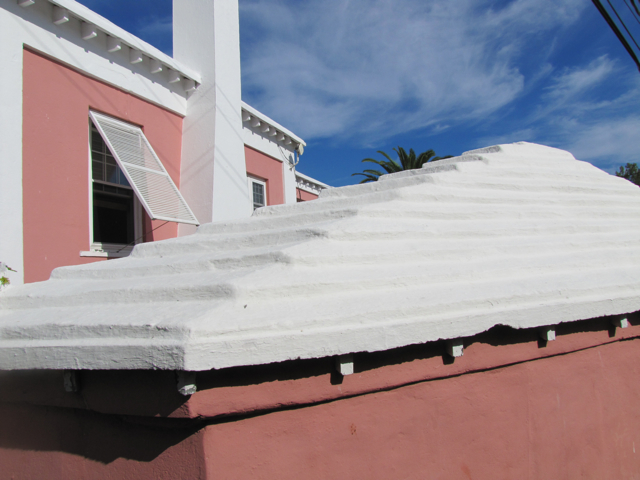
In the photo here you can see a pyramid-like shape to the roof, used to catch rainwater and direct it to a pipe running alongside the building. Instead of basements they build their homes on top of huge water tanks. Bermuda is relatively free of pollution but the roofs are treated with a limestone wash that purifies the water.

Note also in this photo that the shutters open upwards to allow the fresh air in while providing protection from the sun.

Image by April Colosimo

Interact with computers without a mouse

You may still remember the scene from the movie “Minority Report” where Tom Cruise controlled the computer by wearing a pair of special gloves and performing gestures in the air. A new software, called “g-speak”, came into being at Oblong Industries which might change the way we interact with computers in the future, since a mouse will never be useful in a g-speak operating environment. The following video demonstrates how the g-speak system works.

Read more at ‘Minority Report’ software becomes a reality

Keeping safe during a thunderstorm

We have had a few thunderstorms over the spring and summer.  Are you acting safely during these storms?  Test your safety knowledge by identifying the following statements as true or false:

1-    Lightning never strikes in the same place twice.

2-    Lightning only strikes under a storm cloud.

3-    Trees are safe places under which to duck for cover during lighting.

Environment Canada provides the answers to the statements above and presents thunderstorm safety tips in this 3-minute video:

We’ve come a long way, baby…right?

Inspired by my colleague Giovanna’s post about the Science Hall of Fame and their all male Top 10, I want to introduce you to a fantastic Canadian not-for-profit organization, the Society for Canadian Women in Science and Technology (SCWIST). Perhaps you’ve heard of them, maybe you’re even a member, and if that’s the case, bravo!
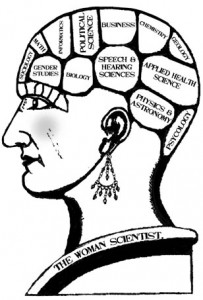
SCWIST has a clear aim and it’s to “support and promote the education of girls and women through programs and activities that [they] develop in partnership with the community…boost the numbers, retention and status of women in the workplace by facilitating networking, mentoring and advocating woman-friendly policies [and] highlight opportunities, achievements and positive messages for and about women in the field. [They] do this by raising public awareness and guiding policy implementation.”

SCWIST has been around since 1981. 31 years ago, there’s no question that SCWIST’s influence would have been greatly needed. The times, yes, they’ve changed (how much they’ve changed is somewhat debatable of course), so if you’re wondering why SCWIST soldiers on, they’ve anticipated this question and provided some excellent answers:

  • Out-dated assumptions persist about women as leaders in science and technology. Men continue to dominate senior leadership positions within these areas, despite the equal ability of their female colleagues

  • There are growing numbers of highly-trained women who have immigrated to Canada who do not work in their chosen fields. Our IWIS program provides support to these women

  • SCWIST grows with the new realities: we support and promote women in their education and career choices

  • As part of our ms infinity program we delight in encouraging girls to imagine science, engineering and technology as part of their future

So, hats off to SCWIST, and to all the girls and women pursuing an education or excelling at a career in science and technology!

Oh, and as an aside, while I was perusing SCWIST’s blog I found the most recent post very interesting. It’s a thoughtful and nuanced piece, wherein the author reacts to the backlash on the blogosphere and Twitterverse, after the European Commission developed and distributed, what turned out to be, a very controversial video as part of their campaign to encourage more girls to pursue STEM careers. If you’re so inclined, watch the video (it’s actually quite hilarious), read the post, and discuss!

Image from Indiana University’s website

Podcasts and rhythmic power

Podcasts are a great way to pass the time while commuting to campus and an opportunity to learn something new.  I admit that I got hooked on NPR’s Pop Culture Happy Hour podcast and fell a little behind on my sci/tech favourites, but yesterday I caught up with Quirks & Quarks from CBC Radio. In the last episode of the season, Bob McDonald interviews McGill’s famous cognitive neuroscientist, Dr. Daniel Levitin, who discusses how a 1/f power law can be used to predict musical rhythms across genres and composers. You can read Dr. Levitin’s paper in PNAS.

There are so many podcasts to explore from CBC and NPR alone but let me know if you have favourites to recommend.

Image from Quirks & Quarks

How to become a Science Hall of Famer

I was browsing through the latest issue of Science and poking around its website when I discovered a video about the Science Hall of Fame.  This hall of fame lists approximately 4,000 scientists whose names have appeared the most frequently in books over the centuries.

The top 10 on the list are:

According to John Bohannon, one of the creators of the Science Hall of Fame, the data used to compile the list provides a few unexpected career tips for individuals who wish to be famous among the popular masses.  One of these tips is to write a best-selling book.  Read Bohannon’s article for all the details.

Image from Meeg-el

Climate change and the Great Lakes

“Earlier this month, researchers at the University of Duluth revealed that the temperature of Lake Superior – the coldest and deepest of the bodies of water that make up the Great Lakes – is sitting at about 20°C, the warmest it’s been in a century.”

We have all heard that rising temperatures have the potential to impact almost everything. For example, if water levels decrease, loads of shipping vessels would need to be decreased too and shipping costs would increase accordingly. And if levels shrink to the point that the Great lakes were no longer connected, shipping might discontinue.

Rising temperatures also lead to the growth of toxic algal in Lake Erie, which increases pollution for people living in that region.

If you are interested in keeping track of this topic, you could set up an email alert in a database, such as SCOPUS. Search by the topic, and then click “Set alert” from the top menu of the search results page. You will be able to receive the updates weekly in your email.

Adapted from Climate change and the Great Lakes